Kevin Faulk rushed eight times for 48 yards on Sunday. Sammy Morris rushed 10 times for 26 yards. Laurence Maroney stood on the sidelines and watched.
It's been tough sledding this season for the New England Patriots' running game -- particularly since this is the time you really need to run the ball. Matt Cassel is more game-manager than game-breaker; no one expects him to put up the type of numbers Tom Brady has put up in recent years. But the ground game has ground to a halt just when the Patriots need it most.
The Patriots are 17th in the NFL in rushing yards per game (113.0) but 24th in yards per carry (3.7). In the first half against San Diego, when the outcome was still in doubt, the Patriots rushed 11 times for 35 yards -- an average of 3.2 yards per carry. Needing just a yard for a touchdown in the third quarter, again with the game still in reach, the Patriots got nothing.
Teams are stacking the line against the run, of course, and daring Cassel to throw downfield. That never helps. But teams stack the line against the Atlanta Falcons and rookie quarterback Matt Ryan, too, and the Michael Turner-led run game still is averaging 5.5 yards per carry this season.
What's the prescription? Certainly, recent history has shown that an offensive line and a solid system do more for a running attack than a particular running back. The Broncos did it first, but more and more teams have shown an ability to shuttle running backs in and out with similar results.
But it goes both ways -- a great offensive line can elevate a good running back, but a great running back can elevate a good offensive line, too. The Patriots' offensive line was supposed to be great last season. Tackle Matt Light and guard Logan Mankins both started in the Pro Bowl last season; center Dan Koppen made the team as a reserve. The talent appears to be there on the offensive line, but they haven't been able to elevate Morris anywhere beyond serviceable. Maroney, for his part, can't seem to get his shoulder healthy enough to be effective -- and even when he was healthy last season, it took the entire season to get him going.
It might be time, after this season, to pull the plug on Maroney. It might be worth investing a first-round pick in a potential game-breaker like Beanie Wells or Knowshown Moreno. (Look what it did for the Vikings last season and the Titans, Panthers and Bears this season.) Both are projected, at this point, to go in the mid-to-late first round. With the way the Patriots played on Sunday night at San Diego, though, the middle of the first round might be right where they're drafting.
Monday, October 13, 2008


Batter-pitcher matchups: ALCS Game 3
Tampa Bay against Jon Lester (4-0, 3.38 ERA in seven career starts)
Good
Jason Bartlett: 4-for-8 (.500)
Carlos Pena: 5-for-16 (.313), 2 HR, 6 RBI
Bad
Carl Crawford: 4-for-14 (.214)
Akinori Iwamura: 4-for-17 (.235), HR, 3 RBI
B.J. Upton: 4-for-18 (.222), HR, 2 RBI
Boston against Matt Garza (3-1, 3.86 ERA in six career starts)
Good
J.D. Drew: 2-for-5 (.400), HR, 2 RBI
Jacoby Ellsbury: 6-for-13 (.462), RBI
Bad
Coco Crisp: 1-for-9 (.111)
David Ortiz: 2-for-10 (.200), 2 HR, 3 RBI
Dustin Pedroia: 3-for-14 (.214)
Kevin Youkilis: 1-for-12 (.083)
Side note: If it seems like Youkilis has ugly career numbers against every single Tampa Bay pitcher, well, he does. The starters, anyway. He's hitting .234 in his career against the Rays, including .232 this season. And it only gets worse in Game 4 -- he's 1-for-14 in his career against Andy Sonnanstine.
Then again, Youkilis is 6-for-10 in the series thus far, so something seems to be working.
And he has had past success against the Rays' bullpen -- he's 8-for-21 (.381) with six walks against Chad Bradford, J.P. Howell, Dan Wheeler and Grant Balfour.
Good
Jason Bartlett: 4-for-8 (.500)
Carlos Pena: 5-for-16 (.313), 2 HR, 6 RBI
Bad
Carl Crawford: 4-for-14 (.214)
Akinori Iwamura: 4-for-17 (.235), HR, 3 RBI
B.J. Upton: 4-for-18 (.222), HR, 2 RBI
Boston against Matt Garza (3-1, 3.86 ERA in six career starts)
Good
J.D. Drew: 2-for-5 (.400), HR, 2 RBI
Jacoby Ellsbury: 6-for-13 (.462), RBI
Bad
Coco Crisp: 1-for-9 (.111)
David Ortiz: 2-for-10 (.200), 2 HR, 3 RBI
Dustin Pedroia: 3-for-14 (.214)
Kevin Youkilis: 1-for-12 (.083)
Side note: If it seems like Youkilis has ugly career numbers against every single Tampa Bay pitcher, well, he does. The starters, anyway. He's hitting .234 in his career against the Rays, including .232 this season. And it only gets worse in Game 4 -- he's 1-for-14 in his career against Andy Sonnanstine.
Then again, Youkilis is 6-for-10 in the series thus far, so something seems to be working.
And he has had past success against the Rays' bullpen -- he's 8-for-21 (.381) with six walks against Chad Bradford, J.P. Howell, Dan Wheeler and Grant Balfour.
Sunday, October 12, 2008
Small sample sizes gone wild
Which of the following players would you take in your lineup?
Player A: 1-for-17 (.059), 2 BB, 2B, RBI
Player B: 4-for-8 (.500), 2 BB, 2 HR, 2 RBI
Trick question. Both players are Dustin Pedroia. Player A is Pedroia during the American League Division Series; Player B is Pedroia thus far in the American League Championship Series.
But Pedroia had to face plenty of questions last week about his lack of production -- he was 0-for-15 before a Game 4 double -- against the Angels. His struggles even sparked news stories like this one and this one and this one. (Words like "skid" and "slump" and "drought" abound.)
Pedroia then went 1-for-3 with a run scored in Game 1 against Tampa Bay and followed that up with a pair of solo home runs against Scott Kazmir in Game 2. His big night prompted news stories like this one and this one and this one. (Phrases like "back to life" and "busted out" and "gathering momentum" abound.)
Look at the dates on those stories. They're less than a week apart!
All of this is worth keeping in mind as we ponder the immediate future of the Red Sox outfield. Jacoby Ellsbury hit .340 in September and was 3-for-5 with a double in Game 1 of the ALDS against the Angels. Since then, though, he's 3-for-24 (.125) with five RBI -- and three of those RBI came on the flukiest of fluke hits, a bloop to center field that never should have fallen to begin with. He's 0-for-15 in his last three games and has failed to reach base entirely; his only RBI came on a ground ball to second base in Game 4 of the ALDS that Howie Kendrick bobbled.
Predictably, the outcry has begun: Bring on Coco Crisp!
Crisp has several things going for him -- he's Ellsbury's equal (or better) defensively, he's hitting .400 (4-for-10) with two doubles in the postseason thus far, and he hit .324 (11-for-34) with five walks and five runs scored against the Rays this season. Against Game 3 starter Matt Garza, he was 1-for-5 this season, including a two-run double in a game in June. And a switch of center fielders worked out great a year ago -- Ellsbury replaced Crisp in center field starting with Game 6 of last season's ALCS and absolutely torched both the Indians and the Rockies.
But Ellsbury is 6-for-13 against Garza in his career; Crisp, in his career, is 1-for-9 against the Rays' 24-year-old right-hander. On top of that, jerking around Ellsbury and Crisp -- for example, what happens if Crisp then goes 0-for-4 against Garza? -- isn't going to do either player's confidence any good.
Terry Francona had a short answer on Sunday afternoon when a reporter asked what happened to Ellsbury.
"Kazmir," he said with a smile.
That's the right idea. James Shields pitched great in Game 1, and Kazmir had the right approach against Ellsbury in Game 2. But Ellsbury has a good track record against Garza, and that's a good reason to give him another shot in Game 3 at Fenway on Monday.
The other reason is that these last three games, as lousy as they've been, are far too small of a sample size on which to base any big decision. Just ask Dustin Pedroia.
Player A: 1-for-17 (.059), 2 BB, 2B, RBI
Player B: 4-for-8 (.500), 2 BB, 2 HR, 2 RBI
Trick question. Both players are Dustin Pedroia. Player A is Pedroia during the American League Division Series; Player B is Pedroia thus far in the American League Championship Series.
But Pedroia had to face plenty of questions last week about his lack of production -- he was 0-for-15 before a Game 4 double -- against the Angels. His struggles even sparked news stories like this one and this one and this one. (Words like "skid" and "slump" and "drought" abound.)
Pedroia then went 1-for-3 with a run scored in Game 1 against Tampa Bay and followed that up with a pair of solo home runs against Scott Kazmir in Game 2. His big night prompted news stories like this one and this one and this one. (Phrases like "back to life" and "busted out" and "gathering momentum" abound.)
Look at the dates on those stories. They're less than a week apart!
All of this is worth keeping in mind as we ponder the immediate future of the Red Sox outfield. Jacoby Ellsbury hit .340 in September and was 3-for-5 with a double in Game 1 of the ALDS against the Angels. Since then, though, he's 3-for-24 (.125) with five RBI -- and three of those RBI came on the flukiest of fluke hits, a bloop to center field that never should have fallen to begin with. He's 0-for-15 in his last three games and has failed to reach base entirely; his only RBI came on a ground ball to second base in Game 4 of the ALDS that Howie Kendrick bobbled.
Predictably, the outcry has begun: Bring on Coco Crisp!
Crisp has several things going for him -- he's Ellsbury's equal (or better) defensively, he's hitting .400 (4-for-10) with two doubles in the postseason thus far, and he hit .324 (11-for-34) with five walks and five runs scored against the Rays this season. Against Game 3 starter Matt Garza, he was 1-for-5 this season, including a two-run double in a game in June. And a switch of center fielders worked out great a year ago -- Ellsbury replaced Crisp in center field starting with Game 6 of last season's ALCS and absolutely torched both the Indians and the Rockies.
But Ellsbury is 6-for-13 against Garza in his career; Crisp, in his career, is 1-for-9 against the Rays' 24-year-old right-hander. On top of that, jerking around Ellsbury and Crisp -- for example, what happens if Crisp then goes 0-for-4 against Garza? -- isn't going to do either player's confidence any good.
Terry Francona had a short answer on Sunday afternoon when a reporter asked what happened to Ellsbury.
"Kazmir," he said with a smile.
That's the right idea. James Shields pitched great in Game 1, and Kazmir had the right approach against Ellsbury in Game 2. But Ellsbury has a good track record against Garza, and that's a good reason to give him another shot in Game 3 at Fenway on Monday.
The other reason is that these last three games, as lousy as they've been, are far too small of a sample size on which to base any big decision. Just ask Dustin Pedroia.
Asked and answered: Jacoby Ellsbury, Red Sox outfielder
Jacoby Ellsbury, still a rookie but playing in his second postseason, is hitless in his last 17 at-bats. He'll have a chance to break out of that slump, though -- he's hitting .462 (6-for-13) against Matt Garza, Tampa Bay's Game 3 starter.
There were a lot of missed opportunities where Game 2 could have turned; how do you guys look at it?
"We had some opportunities; I know we left a lot of runners on base. It was just one of those games we wish we could have got, but we're here now at Fenway and we've already forgotten about that last game."
How do you mentally prepare yourself against Tampa Bay when you know every game is going to be like the last two?
"That's how the playoffs are. The biggest thing is timely hitting. That's going to be a key to this series. Obviously, we left some runners on that we'd like to get across late in the game, but that's the way it goes sometimes."
Do you feel like these two teams know each other so well that it ends up affecting the game?
"Both teams are so relentless. Both of us find a way to be in the ballgame, to give yourself an opportunity to win, and it's no different with Tampa. They just battle back to be in a position to be in it at the end."
When you look at your two games in Tampa, is it satisfying that you got the split or is it disappointing that last night didn't work out?
"We wish we would've got last night's game; we had a lot of opportunities to put it away and come back here 2-0. But if we split down there, we've got three games here to get it done. We can't complain. We can't complain. It would have been nice to get last night's win, but we're already putting it behind us."
You started off hot in these playoffs and things have cooled off a little bit; is there anything that's been happening differently?
"It's just the way it goes sometimes. Unfortunately, you can't stay hot all the time. But it'll turn. It's a matter of time."
Terry Francona said before the game last night that he has faith in you at the top of the order; is it frustrating when he has that much faith in you and you have a tough game?
"Not really. Obviously, you want to go out there and have a great game every time, but it happens. You're not going to have an excellent game every time. It's staying confident; that's the biggest thing. It's a long season, and you're not going to go 4-for-5 every night. It's a best-of-seven-game series. It's not about one game; it's about winning four of them."
There were a lot of missed opportunities where Game 2 could have turned; how do you guys look at it?
"We had some opportunities; I know we left a lot of runners on base. It was just one of those games we wish we could have got, but we're here now at Fenway and we've already forgotten about that last game."
How do you mentally prepare yourself against Tampa Bay when you know every game is going to be like the last two?
"That's how the playoffs are. The biggest thing is timely hitting. That's going to be a key to this series. Obviously, we left some runners on that we'd like to get across late in the game, but that's the way it goes sometimes."
Do you feel like these two teams know each other so well that it ends up affecting the game?
"Both teams are so relentless. Both of us find a way to be in the ballgame, to give yourself an opportunity to win, and it's no different with Tampa. They just battle back to be in a position to be in it at the end."
When you look at your two games in Tampa, is it satisfying that you got the split or is it disappointing that last night didn't work out?
"We wish we would've got last night's game; we had a lot of opportunities to put it away and come back here 2-0. But if we split down there, we've got three games here to get it done. We can't complain. We can't complain. It would have been nice to get last night's win, but we're already putting it behind us."
You started off hot in these playoffs and things have cooled off a little bit; is there anything that's been happening differently?
"It's just the way it goes sometimes. Unfortunately, you can't stay hot all the time. But it'll turn. It's a matter of time."
Terry Francona said before the game last night that he has faith in you at the top of the order; is it frustrating when he has that much faith in you and you have a tough game?
"Not really. Obviously, you want to go out there and have a great game every time, but it happens. You're not going to have an excellent game every time. It's staying confident; that's the biggest thing. It's a long season, and you're not going to go 4-for-5 every night. It's a best-of-seven-game series. It's not about one game; it's about winning four of them."
No more uncertainty about Lester
They're still not on the same page.
Someone asked Red Sox manager Terry Francona at a press conference on Saturday when it was that he felt able to give left-hander Jon Lester the go-ahead to pitch normally and not hold him back the way he'd done early in his return from cancer treatments.
"We did a lot of homework on what he was going through and what to expect physically or what was fair to expect or how we should go about this -- and we really did make him go slow," Francona said. "I made a call to his folks in spring training, and I told them, 'We're really going to piss off your son,' and they laughed. They said, 'You know, we understand why.' We were going to go slow with him, and we did, and it was very frustrating to him. ...
"It's come back. It's come back. He's farther away from being sick; he's bigger and stronger. If you look at video of him, like, from the back, he doesn't even look like the same kid anymore."
Lester, though, reiterated that he felt ready to go, with no restrictions, when spring training began. He might have started the season with just two wins in his first 10 starts and a 3.95 ERA to go along with a 29-to-33 walk-to-strikeout ratio, but that was more attributable to his inexperience than any lingering weakness from his cancer treatments.
"I had a normal off-season, could do the normal routine and come in full-strength and be able to do the same workload as everybody else," he said. "I don't think there were really any issues this year."
Whichever story you believe, it's easy to agree on one thing: There are no issues anymore. In fact, given the sudden shakiness of Josh Beckett and the ongoing maddeningness -- if, you know, that's a word -- of Daisuke Matsuzaka, Lester is the closest thing the Red Sox have to a sure thing right now.
He's thrown 14 straight innings without allowing an earned run in his two playoff starts. He's 6-1 with a 1.51 ERA since Sept. 1. He's 13-1 with a 2.22 ERA at Fenway Park since the regular season began. With a 96-mile-an-hour fastball and a nasty curveball, he's almost untouchable at this point.
And while Lester did his best to duck the "ace" tag on Sunday -- "I just try to go pitch my game," he told assembled reporters. "You guys can put the labels on it as what you want." -- no one was fooled.
"He's the guy everyone wants to give the ball to right now," reliever Manny Delcarmen said.
And if you treat the American League Championship Series as a brand new best-of-five series, Lester is set to pitch Games 1 and 5 with a chance to pitch the Red Sox into the World Series.
"You can't really describe the atmosphere of the ballpark when you go play and every pitch matters," he said. "Every pitch, every at-bat, every out -- it matters so much more trying to get to that next stage."
Someone asked Red Sox manager Terry Francona at a press conference on Saturday when it was that he felt able to give left-hander Jon Lester the go-ahead to pitch normally and not hold him back the way he'd done early in his return from cancer treatments.
"We did a lot of homework on what he was going through and what to expect physically or what was fair to expect or how we should go about this -- and we really did make him go slow," Francona said. "I made a call to his folks in spring training, and I told them, 'We're really going to piss off your son,' and they laughed. They said, 'You know, we understand why.' We were going to go slow with him, and we did, and it was very frustrating to him. ...
"It's come back. It's come back. He's farther away from being sick; he's bigger and stronger. If you look at video of him, like, from the back, he doesn't even look like the same kid anymore."
Lester, though, reiterated that he felt ready to go, with no restrictions, when spring training began. He might have started the season with just two wins in his first 10 starts and a 3.95 ERA to go along with a 29-to-33 walk-to-strikeout ratio, but that was more attributable to his inexperience than any lingering weakness from his cancer treatments.
"I had a normal off-season, could do the normal routine and come in full-strength and be able to do the same workload as everybody else," he said. "I don't think there were really any issues this year."
Whichever story you believe, it's easy to agree on one thing: There are no issues anymore. In fact, given the sudden shakiness of Josh Beckett and the ongoing maddeningness -- if, you know, that's a word -- of Daisuke Matsuzaka, Lester is the closest thing the Red Sox have to a sure thing right now.
He's thrown 14 straight innings without allowing an earned run in his two playoff starts. He's 6-1 with a 1.51 ERA since Sept. 1. He's 13-1 with a 2.22 ERA at Fenway Park since the regular season began. With a 96-mile-an-hour fastball and a nasty curveball, he's almost untouchable at this point.
And while Lester did his best to duck the "ace" tag on Sunday -- "I just try to go pitch my game," he told assembled reporters. "You guys can put the labels on it as what you want." -- no one was fooled.
"He's the guy everyone wants to give the ball to right now," reliever Manny Delcarmen said.
And if you treat the American League Championship Series as a brand new best-of-five series, Lester is set to pitch Games 1 and 5 with a chance to pitch the Red Sox into the World Series.
"You can't really describe the atmosphere of the ballpark when you go play and every pitch matters," he said. "Every pitch, every at-bat, every out -- it matters so much more trying to get to that next stage."
Saturday, October 11, 2008
Batter-pitcher matchups: ALCS Game 2
Tampa Bay against Josh Beckett (5-3, 3.10 ERA in 10 career starts)
Good
Jason Bartlett: 6-for-18 (.333)
Cliff Floyd: 8-for-28 (.286), 2 HR, 4 RBI
Akinori Iwamura: 7-for-22 (.318), HR, RBI
Evan Longoria: 4-for-12 (.333), HR, 2 RBI
Bad
Gabe Gross: 1-for-13 (.077), HR, 2 RBI
Dioner Navarro: 3-for-19 (.158), RBI
Carlos Pena: 3-for-17 (.176), HR, RBI
Boston against Scott Kazmir (6-7, 3.62 ERA in 21 career starts)
Good
Jason Bay: 3-for-9 (.333), HR, 2 RBI
Coco Crisp: 9-for-30 (.300)
Dustin Pedroia: 14-for-25 (.560), HR, 3 RBI
Bad
J.D. Drew: 1-for-7 (.143), RBI
David Ortiz: 8-for-39 (.205), 2 HR, 8 RBI
Jason Varitek: 6-for-28 (.214), HR, 4 RBI
Kevin Youkilis: 7-for-35 (.200), 2 RBI
Good
Jason Bartlett: 6-for-18 (.333)
Cliff Floyd: 8-for-28 (.286), 2 HR, 4 RBI
Akinori Iwamura: 7-for-22 (.318), HR, RBI
Evan Longoria: 4-for-12 (.333), HR, 2 RBI
Bad
Gabe Gross: 1-for-13 (.077), HR, 2 RBI
Dioner Navarro: 3-for-19 (.158), RBI
Carlos Pena: 3-for-17 (.176), HR, RBI
Boston against Scott Kazmir (6-7, 3.62 ERA in 21 career starts)
Good
Jason Bay: 3-for-9 (.333), HR, 2 RBI
Coco Crisp: 9-for-30 (.300)
Dustin Pedroia: 14-for-25 (.560), HR, 3 RBI
Bad
J.D. Drew: 1-for-7 (.143), RBI
David Ortiz: 8-for-39 (.205), 2 HR, 8 RBI
Jason Varitek: 6-for-28 (.214), HR, 4 RBI
Kevin Youkilis: 7-for-35 (.200), 2 RBI
Bid for Iwamura signaled Rays' arrival
Broadcasters and other analysts often get fixated on a certain theme and refuse to let it go. It doesn't matter if it's accurate; as long as it sounds good, it just won't go away. For this series, it's the idea that the Rays announced their arrival with their spring-training brawl with the Yankees and their June brawl with the Red Sox.
Never mind that the Rays have plenty of history of brawling, particularly against the Red Sox -- Gerald Williams and Pedro Martinez being the primary example. All that signaled, in August of 2000, was that the then-Devil Rays were well on their way to a then-franchise record 69 wins.
The moment that started the Rays' ascent wasn't any kind of on-field fight; all their other fights just made them look like a younger brother too frustrated with losing to do anything else. No, the moment that started the Rays' ascent was one subtle transaction: Their successful bid for Japanese import Akinori Iwamura.
Rewind to the 2006 season: The Devil Rays went 61-101 and finished last in the American League East. Scott Kazmir had a 3.24 ERA in his second full season in Tampa Bay; James Shields made 21 starts after being called up from Triple-A Durham. Carl Crawford led the Rays in most offensive categories, and players like Dioner Navarro, B.J. Upton and Delmon Young got their first consistent taste of American League pitching. Andy Sonnanstine had a 2.66 ERA in 28 starts for Double-A Montgomery; J.P. Howell made eight big-league starts but spent most of his time in Durham after having been acquired from Kansas City for Joey Gathright.
And with the No. 3 pick in the draft the previous summer, the Rays had selected third baseman Evan Longoria.
Things, in other words, weren't great -- but things were starting to come together. The Rays had young arms coming through the system and a handful of top prospects were figuring out how to hit at the big-league level. It was close to the point that the Rays only needed to fill a few holes to become a legit contender.
And that's when Iwamura became available on the posting market.
Before that, contending teams had done most of the bidding -- and winning -- when Japanese players became available. Ichiro Suzuki propelled the Seattle Mariners to 116 wins in his first season in the major leagues; the Los Angeles Dodgers won 92 games the year after bringing aboard Kazuhisa Ishii. The San Diego Padres improved from fifth to third to back-to-back division titles after bidding for setup man Akinori Otsuka; he was one of the last pieces, too.
And, in the same week Iwamura became available, the Red Sox landed Daisuke Matsuzaka in the most expensive posting transaction ($51.1 million) in the short history of the process. We all know how that worked out.
The Rays landed Iwamura four days later for the relatively paltry price of $4.5 million. The transaction went almost unnoticed. But it still was fascinating because it was Tampa Bay -- a team that had finished fourth (and won 70 games!) in 2004 and had slipped back to 61 wins in 2006, Joe Maddon's first season -- and the Rays still felt like Iwamura was a player worth their while.
Iwamura filled a specific need, the way Otsuka had for the Padres. The Rays had outfielders (Crawford, Rocco Baldell); they had a young second baseman (Upton) and would sign a young first baseman (Carlos Pena) a few months later. They had a sure-thing third baseman (Longoria) climbing the ladder. They had young pitching (Kazmir, Shields) finding its way. They even had pieces to trade (Young, who would go to Minnesota a year later for Matt Garza and Jason Bartlett).
The Rays needed one more infielder. A team with aspirations to fourth place doesn't need one more infielder; a team with aspirations to third place doesn't bother to participate in the posting system. But the Rays -- who had bid for a relief pitcher a year earlier only to watch him tear his labrum that season -- didn't have aspirations to third place. The Rays had aspirations to a division title even with the Yankees and Red Sox holding a stranglehold on playoff berths out of their division.
Iwamura played third base that season, hitting .285 with seven home runs and had a range factor of 2.38 in the field. (Mike Lowell's range factor, by comparison, was 2.51.) And when Longoria came up for good earlier this season, Iwamura moved to second base and hit .274 with a career-best 70 walks while range-factoring 4.58. (Dustin Pedroia's range factor was 4.75.)
He's not a player like Longoria, who can almost singlehandedly win a playoff series. He's not a player like Pena, who's going to hit 35 home runs a year. He's not a player like Kazmir, who can be the ace of a playoff staff.
But he's the type of player a playoff team needs. He's not the type of player a last-place team needs. And that's why you can trace the start of the Rays' dramatic ascent to their successful bid for Akinori Iwamura.
Never mind that the Rays have plenty of history of brawling, particularly against the Red Sox -- Gerald Williams and Pedro Martinez being the primary example. All that signaled, in August of 2000, was that the then-Devil Rays were well on their way to a then-franchise record 69 wins.
The moment that started the Rays' ascent wasn't any kind of on-field fight; all their other fights just made them look like a younger brother too frustrated with losing to do anything else. No, the moment that started the Rays' ascent was one subtle transaction: Their successful bid for Japanese import Akinori Iwamura.
Rewind to the 2006 season: The Devil Rays went 61-101 and finished last in the American League East. Scott Kazmir had a 3.24 ERA in his second full season in Tampa Bay; James Shields made 21 starts after being called up from Triple-A Durham. Carl Crawford led the Rays in most offensive categories, and players like Dioner Navarro, B.J. Upton and Delmon Young got their first consistent taste of American League pitching. Andy Sonnanstine had a 2.66 ERA in 28 starts for Double-A Montgomery; J.P. Howell made eight big-league starts but spent most of his time in Durham after having been acquired from Kansas City for Joey Gathright.
And with the No. 3 pick in the draft the previous summer, the Rays had selected third baseman Evan Longoria.
Things, in other words, weren't great -- but things were starting to come together. The Rays had young arms coming through the system and a handful of top prospects were figuring out how to hit at the big-league level. It was close to the point that the Rays only needed to fill a few holes to become a legit contender.
And that's when Iwamura became available on the posting market.
Before that, contending teams had done most of the bidding -- and winning -- when Japanese players became available. Ichiro Suzuki propelled the Seattle Mariners to 116 wins in his first season in the major leagues; the Los Angeles Dodgers won 92 games the year after bringing aboard Kazuhisa Ishii. The San Diego Padres improved from fifth to third to back-to-back division titles after bidding for setup man Akinori Otsuka; he was one of the last pieces, too.
And, in the same week Iwamura became available, the Red Sox landed Daisuke Matsuzaka in the most expensive posting transaction ($51.1 million) in the short history of the process. We all know how that worked out.
The Rays landed Iwamura four days later for the relatively paltry price of $4.5 million. The transaction went almost unnoticed. But it still was fascinating because it was Tampa Bay -- a team that had finished fourth (and won 70 games!) in 2004 and had slipped back to 61 wins in 2006, Joe Maddon's first season -- and the Rays still felt like Iwamura was a player worth their while.
Iwamura filled a specific need, the way Otsuka had for the Padres. The Rays had outfielders (Crawford, Rocco Baldell); they had a young second baseman (Upton) and would sign a young first baseman (Carlos Pena) a few months later. They had a sure-thing third baseman (Longoria) climbing the ladder. They had young pitching (Kazmir, Shields) finding its way. They even had pieces to trade (Young, who would go to Minnesota a year later for Matt Garza and Jason Bartlett).
The Rays needed one more infielder. A team with aspirations to fourth place doesn't need one more infielder; a team with aspirations to third place doesn't bother to participate in the posting system. But the Rays -- who had bid for a relief pitcher a year earlier only to watch him tear his labrum that season -- didn't have aspirations to third place. The Rays had aspirations to a division title even with the Yankees and Red Sox holding a stranglehold on playoff berths out of their division.
Iwamura played third base that season, hitting .285 with seven home runs and had a range factor of 2.38 in the field. (Mike Lowell's range factor, by comparison, was 2.51.) And when Longoria came up for good earlier this season, Iwamura moved to second base and hit .274 with a career-best 70 walks while range-factoring 4.58. (Dustin Pedroia's range factor was 4.75.)
He's not a player like Longoria, who can almost singlehandedly win a playoff series. He's not a player like Pena, who's going to hit 35 home runs a year. He's not a player like Kazmir, who can be the ace of a playoff staff.
But he's the type of player a playoff team needs. He's not the type of player a last-place team needs. And that's why you can trace the start of the Rays' dramatic ascent to their successful bid for Akinori Iwamura.
Friday, October 10, 2008
Batter-pitcher matchups: ALCS Game 1
Here are a few batter-pitcher matchups to watch tonight for the Red Sox and Rays as the American League Championship Series opens in Tampa:
Tampa Bay against Daisuke Matsuzaka (2-3, 3.75 in eight starts vs. Rays)
Good
Akinori Iwamura: 9-for-24 (.375), HR, RBI
Carlos Pena: 5-for-16 (.313), HR, 4 RBI
Bad
Jason Bartlett: 1-for-11 (.091)
Dioner Navarro: 3-for-18 (.167), HR, 2 RBI
B.J. Upton: 1-for-13 (.077), solo HR
Boston against James Shields (2-4, 5.23 ERA in eight starts vs. Red Sox)
Good
J.D. Drew: 5-for-15 (.333), HR, 2 RBI
David Ortiz: 7-for-14 (.500), 2 HR, 6 RBI
Dustin Pedroia: 5-for-10 (.500), RBI
Bad
Jacoby Ellsbury: 1-for-10 (.100)
Jason Varitek: 1-for-10 (.100)
Kevin Youkilis: 0-for-17 (.000)*
*That is a really, really ugly number.
Tampa Bay against Daisuke Matsuzaka (2-3, 3.75 in eight starts vs. Rays)
Good
Akinori Iwamura: 9-for-24 (.375), HR, RBI
Carlos Pena: 5-for-16 (.313), HR, 4 RBI
Bad
Jason Bartlett: 1-for-11 (.091)
Dioner Navarro: 3-for-18 (.167), HR, 2 RBI
B.J. Upton: 1-for-13 (.077), solo HR
Boston against James Shields (2-4, 5.23 ERA in eight starts vs. Red Sox)
Good
J.D. Drew: 5-for-15 (.333), HR, 2 RBI
David Ortiz: 7-for-14 (.500), 2 HR, 6 RBI
Dustin Pedroia: 5-for-10 (.500), RBI
Bad
Jacoby Ellsbury: 1-for-10 (.100)
Jason Varitek: 1-for-10 (.100)
Kevin Youkilis: 0-for-17 (.000)*
*That is a really, really ugly number.
Asked and answered: Josh McDaniels, Patriots offensive coordinator
With the Patriots in San Jose this week, offensive coordinator Josh McDaniels spoke over the phone with local media about last week's performance by Matt Cassel and the challenge of the San Diego defense.
Do you think Sunday’s performance is something that you can build off of?
"Definitely. We made some strides from the bye week. We worked on some things that we put a lot of attention towards during the bye week. We had some progress in those areas in the red zone and we ran the ball more effectively. We worked on some things in the passing game that showed up on Sunday. Anytime you have a chance to work on things where you don’t have a certain opponent to prepare for, like we did in the bye week, it gives you a chance to really focus on yourself. I think we made some strides as an offense and I think we will build on that this week."
Do you like how the committee approach running game is going so far?
"We have confidence in all of our backs. We never go into a game with a certain amount of carries for any one of them specifically. We feel good when they’re all in there. Some things like Kevin (Faulk)'s production in the red area last week, I am not sure anyone could have predicted that. That’s the way the game went and the style the game ended up playing out as. Kevin was there to do what we asked of him. But all the backs, we feel good when they are in the game whether it is a passing situation or running situation. We feel good when we give them the ball and expect them to do their job."
Laurence Maroney seemed a bit tentative in Sunday’s game. Is that attributed to his shoulder injury?
"I think there were some situations in the game where there wasn’t much there on a few plays and then there were some other plays, not just singling out Laurence, that there was more yards -- there is always that in the running game. When you carry the ball 44 times there is going to be plays where there is more yards than you gained and there is going to be other plays where maybe you didn’t gain as much as you blocked it for. I didn’t really notice much difference. He practiced yesterday. He practiced fine. The backs are all running the ball well and we expect that to go forward."
Matt Cassel said he does what the coaching staff tells him to do in terms of deep passing routes or not deep passing routes. Was it in the game plan to throw more deep passing routes last game?
"Every week, we try to attack all three levels. Some weeks, we end up throwing more down the field than others, but that’s a product of the defense. If the defense gives us the opportunity to attack that third level down the field, than that’s what we would instruct our quarterbacks to do every week, not just last week. They gave us a few opportunities to go ahead and attack down the field and try to gain significant yardage or create field position for our offense. He is coached to try and take the big play if they give it to you and if not you have to find someone at the second level or use the backs at the check down. We always try to have enough of those in the game plan. It just so happened that last week we had a few of them."
The 66-yarder to Randy Moss: you said Matt Cassel is coached to take what’s there, but Randy was double covered; was that a case of a calculated risk?
"It really wasn’t a double coverage. It was a blitz zone situation and Matt did a really good job of stepping away from were it came from on his backside. The safety happened to not get as much depth as I’m sure they probably would have liked, Randy ran a really good route and Matt saw him at the right time. He felt like the safety wouldn’t get over the top in time and he made a great throw and Randy ran underneath it. We expect plenty of double coverage on our outside wide receivers because we see that off and on over the course of the year. I am sure they were coached to be a little deeper on the route than maybe they were and we were fortunate that we got behind them. Cassel saw that, made a good read and a great throw. "
Did you take some of the reins off Matt Cassel on Sunday? Did he have more freedom to take some chances?
"He’s getting better every week. We try to do every single week what we think our players are capable of doing. He did a really good job in the running game. We ran the ball a tremendous amount of times and he got us in the right play every time. We used some ‘check-with-me’s’ and he handled those exactly the way we would have wanted him to. He’s getting better every week and with that game experience and play experience he’s gaining on a weekly basis, I think that he is growing and maturing. With that comes with a little more here and there. He’s handled a significant portion of our offense for a number of years now. He’s capable of doing it. We feel comfortable with him doing it and he can run it and execute it well -- that’s what we expect him to do."
Would you like to see the sack numbers go down?
"Yes. I think there are different reasons for that. It’s not all one thing or the other. Obviously we don’t want sacks and we really don’t want hem in the red area where we had them last week. It’s a combination of blocking them long enough, reading it quick and getting it out to the people who can catch and run. You definitely don’t want to have four or five sacks in a game and we would like to cut down on that."
Is that an area where Matt Cassel doesn’t have a lot of experience compared to Tom Brady, with adjustments at the line?
It’s really not an adjustment at the line thing. I think it’s a comfortability with sliding in the pocket one way or another while keeping your eyes down the field and finding the next receiver sometimes in the progression. Or, there are certain plays when you have to know the journey is over; you have to take off and run or throw it away in some instances. Again, it’s a team thing. The quarterback certainly plays a part of it. The protection certainly plays a part of it and a lot of times the routes are an important part of sacks -- you have to be open for someone to throw it to you. There has to be cohesiveness that has to go on to eliminate sacks and cut those down. We are really working hard to try and do that."
Do you think Sunday’s performance is something that you can build off of?
"Definitely. We made some strides from the bye week. We worked on some things that we put a lot of attention towards during the bye week. We had some progress in those areas in the red zone and we ran the ball more effectively. We worked on some things in the passing game that showed up on Sunday. Anytime you have a chance to work on things where you don’t have a certain opponent to prepare for, like we did in the bye week, it gives you a chance to really focus on yourself. I think we made some strides as an offense and I think we will build on that this week."
Do you like how the committee approach running game is going so far?
"We have confidence in all of our backs. We never go into a game with a certain amount of carries for any one of them specifically. We feel good when they’re all in there. Some things like Kevin (Faulk)'s production in the red area last week, I am not sure anyone could have predicted that. That’s the way the game went and the style the game ended up playing out as. Kevin was there to do what we asked of him. But all the backs, we feel good when they are in the game whether it is a passing situation or running situation. We feel good when we give them the ball and expect them to do their job."
Laurence Maroney seemed a bit tentative in Sunday’s game. Is that attributed to his shoulder injury?
"I think there were some situations in the game where there wasn’t much there on a few plays and then there were some other plays, not just singling out Laurence, that there was more yards -- there is always that in the running game. When you carry the ball 44 times there is going to be plays where there is more yards than you gained and there is going to be other plays where maybe you didn’t gain as much as you blocked it for. I didn’t really notice much difference. He practiced yesterday. He practiced fine. The backs are all running the ball well and we expect that to go forward."
Matt Cassel said he does what the coaching staff tells him to do in terms of deep passing routes or not deep passing routes. Was it in the game plan to throw more deep passing routes last game?
"Every week, we try to attack all three levels. Some weeks, we end up throwing more down the field than others, but that’s a product of the defense. If the defense gives us the opportunity to attack that third level down the field, than that’s what we would instruct our quarterbacks to do every week, not just last week. They gave us a few opportunities to go ahead and attack down the field and try to gain significant yardage or create field position for our offense. He is coached to try and take the big play if they give it to you and if not you have to find someone at the second level or use the backs at the check down. We always try to have enough of those in the game plan. It just so happened that last week we had a few of them."
The 66-yarder to Randy Moss: you said Matt Cassel is coached to take what’s there, but Randy was double covered; was that a case of a calculated risk?
"It really wasn’t a double coverage. It was a blitz zone situation and Matt did a really good job of stepping away from were it came from on his backside. The safety happened to not get as much depth as I’m sure they probably would have liked, Randy ran a really good route and Matt saw him at the right time. He felt like the safety wouldn’t get over the top in time and he made a great throw and Randy ran underneath it. We expect plenty of double coverage on our outside wide receivers because we see that off and on over the course of the year. I am sure they were coached to be a little deeper on the route than maybe they were and we were fortunate that we got behind them. Cassel saw that, made a good read and a great throw. "
Did you take some of the reins off Matt Cassel on Sunday? Did he have more freedom to take some chances?
"He’s getting better every week. We try to do every single week what we think our players are capable of doing. He did a really good job in the running game. We ran the ball a tremendous amount of times and he got us in the right play every time. We used some ‘check-with-me’s’ and he handled those exactly the way we would have wanted him to. He’s getting better every week and with that game experience and play experience he’s gaining on a weekly basis, I think that he is growing and maturing. With that comes with a little more here and there. He’s handled a significant portion of our offense for a number of years now. He’s capable of doing it. We feel comfortable with him doing it and he can run it and execute it well -- that’s what we expect him to do."
Would you like to see the sack numbers go down?
"Yes. I think there are different reasons for that. It’s not all one thing or the other. Obviously we don’t want sacks and we really don’t want hem in the red area where we had them last week. It’s a combination of blocking them long enough, reading it quick and getting it out to the people who can catch and run. You definitely don’t want to have four or five sacks in a game and we would like to cut down on that."
Is that an area where Matt Cassel doesn’t have a lot of experience compared to Tom Brady, with adjustments at the line?
It’s really not an adjustment at the line thing. I think it’s a comfortability with sliding in the pocket one way or another while keeping your eyes down the field and finding the next receiver sometimes in the progression. Or, there are certain plays when you have to know the journey is over; you have to take off and run or throw it away in some instances. Again, it’s a team thing. The quarterback certainly plays a part of it. The protection certainly plays a part of it and a lot of times the routes are an important part of sacks -- you have to be open for someone to throw it to you. There has to be cohesiveness that has to go on to eliminate sacks and cut those down. We are really working hard to try and do that."
Thursday, October 9, 2008
Chargers a familiar opponent for Patriots
Patriots coach Bill Belichick compared his team's familiarity with the Chargers to its familiarity with the Colts: "It almost seems like a division game. It does. We end up playing them twice a year."
One of the big matchups of the week will be Randy Moss against San Diego's secondary -- Quentin Jammer and Antonio Cromartie in particular. Moss caught his first deep pass Sunday from Matt Cassel since the season opener, but that only means the Chargers will be more on guard than they otherwise would have been.
Belichick, of course, wasn't about to discuss just how he planned to employ Moss (or Wes Welker or Jabar Gaffney, for that matter) this week.
"We'll try to do what we feel like is best against the way the Chargers are playing us, what those matchups are, and try to get the ball to the guys who can be productive with it," he said. "Depending on how they play us in the passing game, hopefully Matt will make his reads and make good decisions and get the ball to the open player, whether that's Randy or someone else."
He also sidestepped several questions about Tom Brady's surgery -- the quarterback underwent surgery on the anterior cruciate ligament on his left knee on Monday, the Boston Globe reported.
"His first responsibility it do do what he needs to do, and then we'll take it from there," he said.
Belichick closed by saying that the team hasn't done much other than focus on football for the last three days -- but one reporter did say a couple of players were spotted at Alcatraz on Tuesday.
"Hopefully, they were in civilian clothes," Belichick quipped.
One of the big matchups of the week will be Randy Moss against San Diego's secondary -- Quentin Jammer and Antonio Cromartie in particular. Moss caught his first deep pass Sunday from Matt Cassel since the season opener, but that only means the Chargers will be more on guard than they otherwise would have been.
Belichick, of course, wasn't about to discuss just how he planned to employ Moss (or Wes Welker or Jabar Gaffney, for that matter) this week.
"We'll try to do what we feel like is best against the way the Chargers are playing us, what those matchups are, and try to get the ball to the guys who can be productive with it," he said. "Depending on how they play us in the passing game, hopefully Matt will make his reads and make good decisions and get the ball to the open player, whether that's Randy or someone else."
He also sidestepped several questions about Tom Brady's surgery -- the quarterback underwent surgery on the anterior cruciate ligament on his left knee on Monday, the Boston Globe reported.
"His first responsibility it do do what he needs to do, and then we'll take it from there," he said.
Belichick closed by saying that the team hasn't done much other than focus on football for the last three days -- but one reporter did say a couple of players were spotted at Alcatraz on Tuesday.
"Hopefully, they were in civilian clothes," Belichick quipped.
Wednesday, October 8, 2008
ALCS means fresh start for some
The plastic tarps were down, the room smelled more like carpet cleaner than Bud Light, and there were no oversized blue goggles in sight. (Closer Jonathan Papelbon sauntered into the clubhouse in some pretty sharp sunglasses, but that was it.)
The clubhouse was clean, and so too is the slate for the Red Sox as they prepare to open the American League Championship Series against the Tampa Bay Rays on Friday. Some players -- Jason Bay, Jon Lester, Jed Lowrie -- are looking to carry over momentum from last week's victories over the Los Angeles Angels of Anaheim. Others, though, welcome the chance to start as fresh as the aroma in the clubhouse on Wednesday:
Tim Wakefield: The knuckleballer was announced by Terry Francona on Wednesday as the Game 4 starter in the series; he did not appear in the American League Division Series. Wakefield is 19-5 with a 3.32 ERA in his career against Tampa Bay, but much of that success came before the Rays were, you know, good; he surrendered 12 earned runs in 9 2/3 innings against Tampa Bay this season.
He also hasn't pitched in a game since Sept. 28, and when he pitches, it'll be on more than two weeks' rest.
"They'll probably simulate a game here, today or tomorrow, but I don't know that for sure," catcher Jason Varitek said.
Mike Timlin: He's made more appearances than any other right-handed pitcher in baseball history, but a rough end to the season -- his ERA was 9.39 in September -- resulted in Francona leaving him off the roster for the ALDS against the Angels. The roster for the ALCS won't be announced until Thursday, but Timlin could have a shot to make the roster as the 11th pitcher for the seven-game series.
He wasn't happy when Francona left him off the roster initially.
"I can't say the whole conversation was professional," he said, "but that's between he and I. If you don't have passion to play the game, you need to stop."
But he came to grips with his role as the series began.
"It was frustrating at the beginning, but I've got to accept my role, got to help the team when I can," he said. "It's not going to do any good to be moping on the bench, so be positive, go get 'em, help the guys out."
Sean Casey: The veteran first baseman was the lone position player not to see any action in the series. Even when Kevin Youkilis moved to third base to replace an injured Mike Lowell, Casey remained on the bench in favor of the more athletic Mark Kotsay.
He's spent a lot of time on the bench this season, particularly in the second half -- he had just 73 at-bats in 26 games after the All-Star break, and he hit just .233 in that span. But he knew when he joined the team that he wasn't going to be playing every day.
"I'm ready to do whatever (Francona) wants me to do," he said. "My role, if I'm not in there, is to come off (the bench) and pinch-hit in a certain situation. That didn't happen in the last series, but we'll see what happens in this series. ... I know Tito has his reasons, and he's had good reasons all year long, so I don't really question anything he's done or anything he ever does."
Dustin Pedroia: The MVP candidate was hitless in his first 15 at-bats of the ALDS before ringing a big double off the Green Monster for a big run in Game 4. He could be primed for a big series against the Rays: He was 5-for-10 with a walk this season against anticipated Game 1 starter James Shields, and he was 5-for-9 with a double, a triple and a home run against ace Scott Kazmir.
As far as he's concerned, the series against the Angels is over and done with.
"We won that series, and that's all in the past," he said. "I'm just excited to go out there and help our team win. I don't care a lot about personal achievements."
Said Varitek, "That guy played phenomenal defense for us and had good at-bats. He could have walked out there with five hits, easy, and a home run. The ball didn't carry. ... Pedey is a huge part, whether he hits or not, because he's going to have quality at-bats. He doesn't waste at-bats. He plays phenomenal defense. He's our stud."
The clubhouse was clean, and so too is the slate for the Red Sox as they prepare to open the American League Championship Series against the Tampa Bay Rays on Friday. Some players -- Jason Bay, Jon Lester, Jed Lowrie -- are looking to carry over momentum from last week's victories over the Los Angeles Angels of Anaheim. Others, though, welcome the chance to start as fresh as the aroma in the clubhouse on Wednesday:
Tim Wakefield: The knuckleballer was announced by Terry Francona on Wednesday as the Game 4 starter in the series; he did not appear in the American League Division Series. Wakefield is 19-5 with a 3.32 ERA in his career against Tampa Bay, but much of that success came before the Rays were, you know, good; he surrendered 12 earned runs in 9 2/3 innings against Tampa Bay this season.
He also hasn't pitched in a game since Sept. 28, and when he pitches, it'll be on more than two weeks' rest.
"They'll probably simulate a game here, today or tomorrow, but I don't know that for sure," catcher Jason Varitek said.
Mike Timlin: He's made more appearances than any other right-handed pitcher in baseball history, but a rough end to the season -- his ERA was 9.39 in September -- resulted in Francona leaving him off the roster for the ALDS against the Angels. The roster for the ALCS won't be announced until Thursday, but Timlin could have a shot to make the roster as the 11th pitcher for the seven-game series.
He wasn't happy when Francona left him off the roster initially.
"I can't say the whole conversation was professional," he said, "but that's between he and I. If you don't have passion to play the game, you need to stop."
But he came to grips with his role as the series began.
"It was frustrating at the beginning, but I've got to accept my role, got to help the team when I can," he said. "It's not going to do any good to be moping on the bench, so be positive, go get 'em, help the guys out."
Sean Casey: The veteran first baseman was the lone position player not to see any action in the series. Even when Kevin Youkilis moved to third base to replace an injured Mike Lowell, Casey remained on the bench in favor of the more athletic Mark Kotsay.
He's spent a lot of time on the bench this season, particularly in the second half -- he had just 73 at-bats in 26 games after the All-Star break, and he hit just .233 in that span. But he knew when he joined the team that he wasn't going to be playing every day.
"I'm ready to do whatever (Francona) wants me to do," he said. "My role, if I'm not in there, is to come off (the bench) and pinch-hit in a certain situation. That didn't happen in the last series, but we'll see what happens in this series. ... I know Tito has his reasons, and he's had good reasons all year long, so I don't really question anything he's done or anything he ever does."
Dustin Pedroia: The MVP candidate was hitless in his first 15 at-bats of the ALDS before ringing a big double off the Green Monster for a big run in Game 4. He could be primed for a big series against the Rays: He was 5-for-10 with a walk this season against anticipated Game 1 starter James Shields, and he was 5-for-9 with a double, a triple and a home run against ace Scott Kazmir.
As far as he's concerned, the series against the Angels is over and done with.
"We won that series, and that's all in the past," he said. "I'm just excited to go out there and help our team win. I don't care a lot about personal achievements."
Said Varitek, "That guy played phenomenal defense for us and had good at-bats. He could have walked out there with five hits, easy, and a home run. The ball didn't carry. ... Pedey is a huge part, whether he hits or not, because he's going to have quality at-bats. He doesn't waste at-bats. He plays phenomenal defense. He's our stud."
Rotation set: Dice-K, Beckett, Lester, Wakefield
Terry Francona today announced his rotation for the American League Championship Series:
Game 1 (Friday in Tampa Bay): Daisuke Matsuzaka
Game 2 (Saturday in Tampa Bay): Josh Beckett
Game 3 (Monday at Fenway Park): Jon Lester
Game 4 (Tuesday at Fenway Park): Tim Wakefield
Game 5 (Thursday, Oct. 16, at Fenway Park, if necessary): Matsuzaka
Game 6 (Saturday, Oct. 18, at Tropicana Field, if necessary): Beckett
Game 7 (Sunday, Oct. 19, at Tropicana Field, if necessary): Lester
Francona said he didn't spent too much time looking at matchups, home-road splits, indoor-outdoor splits, anything like that. For his pitchers, he said, the biggest factor was rest and routine.
"The reasoning is actually pretty simple," he said. "It gives people rest -- not too much rest, and not too little. This is the best way and not have one guy going on eight (days' rest) and another guy going on regular. We'll keep everybody somewhat in line. Rest, at this time of year, is huge, and we'll take advantage of it while trying not to give too much. ...
"You can get into a lot of details, but there didn't really need to be. The way it lined up was appropriate. For us, factoring in the fact that those three will pitch twice if it goes to seven, in the end, as long as they're pitching, the order isn't as important, so you go on what's best for them."
One natural question was his choice of Wakefield over Paul Byrd.
"We considered everything," he said. "When it comes down to what serves the ballclub best, Byrd can probably be used a little more flexibly -- is that a word? -- more flexible out of the bullpen. You line up Wake and you put him with (catcher Kevin) Cash, and you see how far he can go and you can make your determinations on how to go to the bullpen as opposed to trying bring in Wake in the middle of a game, knowing that he's possibly throwing to a catcher you haven't had (him throw to). It's kind of an easy decision when you look at all the dynamics of it."
One reporter pressed Francona on his reasons for pitching Beckett in Game 2 rather than trying to move up the scorching-hot Lester and have him available in Game 6 rather than Game 7. Francona was almost incredulous.
"If you do that, you have one guy going on normal rest who has been pushed pretty good two starts in a row, and then you have another guy that's pitched once in three weeks that would be (pitching) once in three weeks," Francona said. "Before Beckett's last start, he was the best postseason pitcher maybe in the history of the game. He had the audacity to be a little rusty after two weeks. We don't need to run away from Beckett. We need to get him on a run."
Game 1 (Friday in Tampa Bay): Daisuke Matsuzaka
Game 2 (Saturday in Tampa Bay): Josh Beckett
Game 3 (Monday at Fenway Park): Jon Lester
Game 4 (Tuesday at Fenway Park): Tim Wakefield
Game 5 (Thursday, Oct. 16, at Fenway Park, if necessary): Matsuzaka
Game 6 (Saturday, Oct. 18, at Tropicana Field, if necessary): Beckett
Game 7 (Sunday, Oct. 19, at Tropicana Field, if necessary): Lester
Francona said he didn't spent too much time looking at matchups, home-road splits, indoor-outdoor splits, anything like that. For his pitchers, he said, the biggest factor was rest and routine.
"The reasoning is actually pretty simple," he said. "It gives people rest -- not too much rest, and not too little. This is the best way and not have one guy going on eight (days' rest) and another guy going on regular. We'll keep everybody somewhat in line. Rest, at this time of year, is huge, and we'll take advantage of it while trying not to give too much. ...
"You can get into a lot of details, but there didn't really need to be. The way it lined up was appropriate. For us, factoring in the fact that those three will pitch twice if it goes to seven, in the end, as long as they're pitching, the order isn't as important, so you go on what's best for them."
One natural question was his choice of Wakefield over Paul Byrd.
"We considered everything," he said. "When it comes down to what serves the ballclub best, Byrd can probably be used a little more flexibly -- is that a word? -- more flexible out of the bullpen. You line up Wake and you put him with (catcher Kevin) Cash, and you see how far he can go and you can make your determinations on how to go to the bullpen as opposed to trying bring in Wake in the middle of a game, knowing that he's possibly throwing to a catcher you haven't had (him throw to). It's kind of an easy decision when you look at all the dynamics of it."
One reporter pressed Francona on his reasons for pitching Beckett in Game 2 rather than trying to move up the scorching-hot Lester and have him available in Game 6 rather than Game 7. Francona was almost incredulous.
"If you do that, you have one guy going on normal rest who has been pushed pretty good two starts in a row, and then you have another guy that's pitched once in three weeks that would be (pitching) once in three weeks," Francona said. "Before Beckett's last start, he was the best postseason pitcher maybe in the history of the game. He had the audacity to be a little rusty after two weeks. We don't need to run away from Beckett. We need to get him on a run."
Tuesday, October 7, 2008
Francona has options for ALCS rotation
Terry Francona said late Monday night that he wasn't going to make any knee-jerk decisions about his roster and his pitching rotation for the American League Championship Series against the Tampa Bay Rays. You can bet that he and pitching coach John Farrell are having some in-depth conversations about how they're going to line up their pitchers for Games 1-4 for the series that starts Friday at Tropicana Field.
Here's one writer's view about how the staff should break down:
Game 1: Daisuke Matsuzaka. This one seems easy. Dice-K would have pitched Game 5 in Anaheim on Wednesday had it been necessary; instead, he'll take the ball on six days' rest against the Rays on Friday. Matsuzaka was 18-3 with a 2.90 ERA this season, and he allowed two earned runs in two starts (10 innings pitched) at Tropicana Field.
He made eight starts this season on six days' rest and had a 3.05 ERA; he actually was better on five days' rest (6-1, 2.49 ERA) than on four. But if he starts Game 1, he'd be ready to come back for Game 5 on, you guessed it, five days' rest.
Game 2: Josh Beckett. There's a temptation, given the way he pitched against Los Angeles and given that he'll be on regular rest, to bring back Jon Lester in this spot. Lester has been a monster in the postseason thus far; he pitched 14 innings against the Angels and surrendered just one unearned run.
But let's not forget just how good Beckett is. He labored through his five innings of work on Sunday, but he'd be pitching on six days' rest and against a team he dominated this season -- he was 2-1 but had a 2.06 ERA in 35 innings pitched against Tampa Bay this season. That includes a 1.20 ERA in 15 innings pitched at Tropicana Field.
Game 3: Jon Lester. There's not much more you can say about the left-handed ace, but there are a couple of reasons to save him until Game 3. For one thing, he was 11-1 with a 2.49 ERA at home this season but 5-5 with a 4.09 ERA on the road. For another, he was spectacular (0.90 ERA in 20 innings pitched) against the Rays this season -- but all of those innings were at Fenway Park and not at Tropicana Field.
And here's one more reason: It seems unlikely that the Rays are going to dispose of the Red Sox in four or five games. If you slot Lester in here, he'll be prepared either to come back and pitch a potential Game 7 on four days rest. (And, if the Red Sox win the series without needing Lester twice, he'll be ready to take the ball in Game 1 of the World Series -- at Fenway Park.)
Game 4: Tim Wakefield. The knuckleballer's need for a personal catcher makes lineup moves complicated if he's needed out of the bullpen in the late innings. But that shouldn't be what gives him the edge here.
Unlike the Angels, the Rays present a lefty-heavy lineup. Carlos Pena is left-handed. Carl Crawford is left-handed. Gabe Gross is left-handed. Akinori Iwamura is left-handed. Cliff Floyd and Eric Hinske both are left-handed. Dioner Navarro is a switch-hitter but was better from the left side this season.
Paul Byrd has seen right-handed hitters hit .241 against him in his career (.255 this season). Left-handed hitters, on the other hand, are hitting .311 (.317 this season). Wakefield, meanwhile, has seen left-handers hit .248 against him in his career (.243 this season); right-handers (.256, .218 this season) aren't any better.
On top of that, right-hander B.J. Upton, who hit two home runs against the White Sox on Monday, is 5-for-22 (.227) with no extra-base hits in his career against Wakefield. He's 3-for-8 with a double and a walk against Byrd.
Here's one writer's view about how the staff should break down:
Game 1: Daisuke Matsuzaka. This one seems easy. Dice-K would have pitched Game 5 in Anaheim on Wednesday had it been necessary; instead, he'll take the ball on six days' rest against the Rays on Friday. Matsuzaka was 18-3 with a 2.90 ERA this season, and he allowed two earned runs in two starts (10 innings pitched) at Tropicana Field.
He made eight starts this season on six days' rest and had a 3.05 ERA; he actually was better on five days' rest (6-1, 2.49 ERA) than on four. But if he starts Game 1, he'd be ready to come back for Game 5 on, you guessed it, five days' rest.
Game 2: Josh Beckett. There's a temptation, given the way he pitched against Los Angeles and given that he'll be on regular rest, to bring back Jon Lester in this spot. Lester has been a monster in the postseason thus far; he pitched 14 innings against the Angels and surrendered just one unearned run.
But let's not forget just how good Beckett is. He labored through his five innings of work on Sunday, but he'd be pitching on six days' rest and against a team he dominated this season -- he was 2-1 but had a 2.06 ERA in 35 innings pitched against Tampa Bay this season. That includes a 1.20 ERA in 15 innings pitched at Tropicana Field.
Game 3: Jon Lester. There's not much more you can say about the left-handed ace, but there are a couple of reasons to save him until Game 3. For one thing, he was 11-1 with a 2.49 ERA at home this season but 5-5 with a 4.09 ERA on the road. For another, he was spectacular (0.90 ERA in 20 innings pitched) against the Rays this season -- but all of those innings were at Fenway Park and not at Tropicana Field.
And here's one more reason: It seems unlikely that the Rays are going to dispose of the Red Sox in four or five games. If you slot Lester in here, he'll be prepared either to come back and pitch a potential Game 7 on four days rest. (And, if the Red Sox win the series without needing Lester twice, he'll be ready to take the ball in Game 1 of the World Series -- at Fenway Park.)
Game 4: Tim Wakefield. The knuckleballer's need for a personal catcher makes lineup moves complicated if he's needed out of the bullpen in the late innings. But that shouldn't be what gives him the edge here.
Unlike the Angels, the Rays present a lefty-heavy lineup. Carlos Pena is left-handed. Carl Crawford is left-handed. Gabe Gross is left-handed. Akinori Iwamura is left-handed. Cliff Floyd and Eric Hinske both are left-handed. Dioner Navarro is a switch-hitter but was better from the left side this season.
Paul Byrd has seen right-handed hitters hit .241 against him in his career (.255 this season). Left-handed hitters, on the other hand, are hitting .311 (.317 this season). Wakefield, meanwhile, has seen left-handers hit .248 against him in his career (.243 this season); right-handers (.256, .218 this season) aren't any better.
On top of that, right-hander B.J. Upton, who hit two home runs against the White Sox on Monday, is 5-for-22 (.227) with no extra-base hits in his career against Wakefield. He's 3-for-8 with a double and a walk against Byrd.
My first champagne bath
My tape recorder didn't work.
My notebook was drenched, every stitch of clothing on my body smelled like a wine cellar, and my tape recorder didn't work. I looked like I just crawled out of a business meeting in a gin joint. My hair was sticking straight up in the air, and I don't use hair gel. More importantly, though, my job is to interview baseball players and put what they say into newspaper articles, and my tape recorder didn't work.
It's OK, though. David Ortiz drowned it. Julio Lugo, too. Coco Crisp can be blamed for some of the damage. Mostly, though, it was Ortiz -- while my recorder was in the face of Jed Lowrie, collecting his garbled thoughts about his walk-off hit that sent the Red Sox to the ALCS, Ortiz cracked open a bottle of champagne and dumped it all over Lowrie. And while Lowrie was trying to tell us about the pitch he hit (a curveball) and how the pitch on which he struck out on Sunday night (a curveball) prepared him for it, Ortiz wrapped the skinny shortstop in a bear hug and started jumping up and down. Lowrie, his huge blue goggles covering most of his forehead, had no choice but to start jumping, too.
This was my first champagne bath.
I just started covering the Red Sox this week; I moved from Minnesota in late September to take over the duty of covering the Olde Town Team for the New Hampshire Union Leader. I showed up for the first time on Saturday afternoon for between-games media availability, and I didn't have a clue what I was doing. I covered big-time college basketball for The Daily Tar Heel at UNC, and I even got to cover the Twins twice in my two years at the St. Cloud Times, but the Red Sox are the Red Sox. Before I could even start acting like a journalist, I had to get it through my head that I was going to be covering the Red Sox at Fenway Park.
I had to get all of that out of my system on Saturday. I sat in the bleachers behind the first-base dugout for a few minutes, taking in everything from the grass to the lights to journalism legend Peter Gammons getting set up with the ESPN cameras in front of the dugout. I took in everything from the tour group in the left-field bleachers to the antique Cask 'n' Flagon sign beyond the Green Monster. I told myself to be cool, but even I couldn't pretend I wasn't overwhelmed by where I was.
I got through that first day, those first press conferences. I got through my first game, the 12-inning thriller that Erick Aybar won with a single to center field off Javier Lopez. I got through my first pregame media session in the office of Terry Francona; I didn't even garble my first question. But when Lowrie's single rolled through the right side, my editor back at the Union Leader told me I had about half an hour to get a story on Lowrie and Jason Bay and get it filed in time for the metro editions.
That meant sprinting for and squeezing into the elevator. That meant fighting through crowds heading for the exits to get to the entrance of the Red Sox locker room. That meant walking into a zoo of overgrown frat boys dumping cans of Bud Light over each other's heads as if they'd never felt so excited in their lives -- Ortiz, who cemented his postseason legend four years ago, was completely out of control. Theo Epstein walked by in a red shirt that already was soaked through with champagne. Francona took a swig of champagne from a bottle and spit out the suds. Jon Lester was already surrounded by reporters and TV cameras, and Julio Lugo was spraying the whole group with bubbly.
I needed to find Lowrie. I needed to find Bay. I couldn't hear anything because the music was so loud, but I needed to find my guys and I needed to finish my story. I slalomed around the Japanese reporters talking to Daisuke Matsuzaka and the coaches and training staff and assorted other support-staff faces I'd never seen before in my life. A New England Cable News camera eventually found Lowrie and I jumped in, shouting a question about how it felt being a newcomer to the postseason in a clubhouse full of playoff veterans. He shouted back an answer. Someone else shouted a question that probably was about the pitch he hit; it was hard to tell because the music was so loud.
I then left Lowrie to go track down Bay -- he was back in the training room. Jacoby Ellsbury emerged first, goggles on and champagne spraying, but Bay came out a moment later. He went first to his locker to slide his batting gloves under the sheets of plastic covering everything; I trailed him the whole way, like a puppy -- I couldn't afford to let him slip away if I was going to file my story. When another reporter stepped into his path, we boxed him in and shouted a few questions ("How did it feel scoring that run? What were you thinking when you saw Lowrie's hit? How does this first playoff series win feel?") over the melee before he slipped away again to go find his wife.
By that time, it was 11:57 and I needed to get writing on my story. I ducked out of the clubhouse to head back upstairs and start writing; I smelled like a bachelor party, but I was free and clear and ready to start writing. All I had to do was transcribe a few quotes from Lowrie and Bay and fit them into my play-by-play and analysis. And my tape recorder didn't work.
I was covering the Red Sox in the playoffs, though, so it's all OK.
My notebook was drenched, every stitch of clothing on my body smelled like a wine cellar, and my tape recorder didn't work. I looked like I just crawled out of a business meeting in a gin joint. My hair was sticking straight up in the air, and I don't use hair gel. More importantly, though, my job is to interview baseball players and put what they say into newspaper articles, and my tape recorder didn't work.
It's OK, though. David Ortiz drowned it. Julio Lugo, too. Coco Crisp can be blamed for some of the damage. Mostly, though, it was Ortiz -- while my recorder was in the face of Jed Lowrie, collecting his garbled thoughts about his walk-off hit that sent the Red Sox to the ALCS, Ortiz cracked open a bottle of champagne and dumped it all over Lowrie. And while Lowrie was trying to tell us about the pitch he hit (a curveball) and how the pitch on which he struck out on Sunday night (a curveball) prepared him for it, Ortiz wrapped the skinny shortstop in a bear hug and started jumping up and down. Lowrie, his huge blue goggles covering most of his forehead, had no choice but to start jumping, too.
This was my first champagne bath.
I just started covering the Red Sox this week; I moved from Minnesota in late September to take over the duty of covering the Olde Town Team for the New Hampshire Union Leader. I showed up for the first time on Saturday afternoon for between-games media availability, and I didn't have a clue what I was doing. I covered big-time college basketball for The Daily Tar Heel at UNC, and I even got to cover the Twins twice in my two years at the St. Cloud Times, but the Red Sox are the Red Sox. Before I could even start acting like a journalist, I had to get it through my head that I was going to be covering the Red Sox at Fenway Park.
I had to get all of that out of my system on Saturday. I sat in the bleachers behind the first-base dugout for a few minutes, taking in everything from the grass to the lights to journalism legend Peter Gammons getting set up with the ESPN cameras in front of the dugout. I took in everything from the tour group in the left-field bleachers to the antique Cask 'n' Flagon sign beyond the Green Monster. I told myself to be cool, but even I couldn't pretend I wasn't overwhelmed by where I was.
I got through that first day, those first press conferences. I got through my first game, the 12-inning thriller that Erick Aybar won with a single to center field off Javier Lopez. I got through my first pregame media session in the office of Terry Francona; I didn't even garble my first question. But when Lowrie's single rolled through the right side, my editor back at the Union Leader told me I had about half an hour to get a story on Lowrie and Jason Bay and get it filed in time for the metro editions.
That meant sprinting for and squeezing into the elevator. That meant fighting through crowds heading for the exits to get to the entrance of the Red Sox locker room. That meant walking into a zoo of overgrown frat boys dumping cans of Bud Light over each other's heads as if they'd never felt so excited in their lives -- Ortiz, who cemented his postseason legend four years ago, was completely out of control. Theo Epstein walked by in a red shirt that already was soaked through with champagne. Francona took a swig of champagne from a bottle and spit out the suds. Jon Lester was already surrounded by reporters and TV cameras, and Julio Lugo was spraying the whole group with bubbly.
I needed to find Lowrie. I needed to find Bay. I couldn't hear anything because the music was so loud, but I needed to find my guys and I needed to finish my story. I slalomed around the Japanese reporters talking to Daisuke Matsuzaka and the coaches and training staff and assorted other support-staff faces I'd never seen before in my life. A New England Cable News camera eventually found Lowrie and I jumped in, shouting a question about how it felt being a newcomer to the postseason in a clubhouse full of playoff veterans. He shouted back an answer. Someone else shouted a question that probably was about the pitch he hit; it was hard to tell because the music was so loud.
I then left Lowrie to go track down Bay -- he was back in the training room. Jacoby Ellsbury emerged first, goggles on and champagne spraying, but Bay came out a moment later. He went first to his locker to slide his batting gloves under the sheets of plastic covering everything; I trailed him the whole way, like a puppy -- I couldn't afford to let him slip away if I was going to file my story. When another reporter stepped into his path, we boxed him in and shouted a few questions ("How did it feel scoring that run? What were you thinking when you saw Lowrie's hit? How does this first playoff series win feel?") over the melee before he slipped away again to go find his wife.
By that time, it was 11:57 and I needed to get writing on my story. I ducked out of the clubhouse to head back upstairs and start writing; I smelled like a bachelor party, but I was free and clear and ready to start writing. All I had to do was transcribe a few quotes from Lowrie and Bay and fit them into my play-by-play and analysis. And my tape recorder didn't work.
I was covering the Red Sox in the playoffs, though, so it's all OK.
Monday, October 6, 2008
Red Sox replace Lowell on ALDS roster
The Red Sox just announced they have replaced Mike Lowell (right hip strain) on the ALDS roster with infielder Gil Velazquez. Because he is being replaced mid-series, Lowell will not be eligible for the American League Championship Series should the Red Sox advance. He went 0-for-8 in two starts in the series.
Velazquez went 1-for-8 with one RBI after his recall from Pawtucket on Sept. 25. He hit .260 with 10 home runs and 46 RBI while playing all four infield positions for the PawSox; in theory, he gives the Red Sox some versatility in terms of defensive substitutions and pinch-running.
Velazquez went 1-for-8 with one RBI after his recall from Pawtucket on Sept. 25. He hit .260 with 10 home runs and 46 RBI while playing all four infield positions for the PawSox; in theory, he gives the Red Sox some versatility in terms of defensive substitutions and pinch-running.
Belichick, Patriots settled in on the West Coast
Bill Belichick held a conference call with reporters today from the San Jose area, where the Patriots will spend this week in preparation for Sunday night's game against the San Diego Chargers. Among the topics discussed:
On the three big interceptions the Patriots made in the game:
"They were big plays in the game. The first play, the 49ers were trying to take a shot down the field. They tossed it up there to Delanie Walker and I thought Brandon Meriweather made a real good play on the ball. He batted it away and fortunately it came back down in his lap when he landed on his back. On the second interception, Rodney (Harrison) got a good read on J.T. O’Sullivan and made a good break on the ball. It came down and it was kind of the same thing. It got broken up at first, ricocheted up in the air and he was able to finish the play for the interception. The last play was a third-down play on a crossing pattern where O’Sullivan scrambled out of the pocket. I think he was trying to make something happen on fourth down. It went through Rodney’s hands but fortunately Deltha (O’Neal) was right there behind him. From a field-position standpoint, it would have been better for us if we hadn’t intercepted it, but it’s always good to see the ball end up in our hands at the end of a play, so we’ll take it."
On Matt Cassel's long touchdown pass to Randy Moss:
"It always helps to score on a big play. I think that forces the defense to respect you and it opens up some other things. It’s not always possible, but I think you always like to throw a couple down there to at least let them know that you are thinking about it. We did that or tried to do it. Some plays it went down the field, and some it didn’t. But we had some deep passes designed as we always do, to try and test the defense on all three levels - the short, intermediate and deep level. It’s great to have it all happen in one play like that. Matt did a nice job of stepping up in the pocket. They had a free blitzer coming from the backside with Tarell Brown coming off the corner. Matt stepped up and put the ball right on the money, and Randy ran through it. It was a big play for us, one that you always like to see. It’s always good to see it all happen in one play."
On adjustments to the Patriots' third-down defense:
"In yesterday’s game we used different combinations in our sub-defense. Some four-man lines, three-man lines, two-man lines and at times we only had one defensive lineman out there -- Jarvis (Green) or Mike Wright. That was probably more of a game-planning week thing than a bye-week thing. It was something strategically that we felt we would want to run this week against San Francisco. Those guys did a good job, although we had several players that really stepped up in some of those passing situations. A lot of them third down but some of it was two minute in the fourth quarter -- Jonathan Wilhite, Terrence Wheatley, Gary Guyton, Pierre Woods and Jarvis Green. We had a number of those guys, including Brandon Meriweather, come in and play well in passing situations and be productive for us. The bottom line was we were able to do a combination of things. One was get ahead in the game and two, do a decent job against the running game. Those two factors helped to push it toward a passing game and more of a one-dimensional game. So we really only defended one thing and that helped us on third down and on fourth-quarter, two-minute situations."
On injured running back Lamont Jordan:
"He came in and got treatment today. We will have to see how he is later in the week. We didn’t practice today, and we won’t practice tomorrow. Everybody is just walking around today. We’ll see where everyone is when we go out there and get on the practice field later in the week. But he looks like a pretty quick healer."
On the running-back situation with Kevin Faulk, Laurence Maroney and Sammy Morris:
On the three big interceptions the Patriots made in the game:
"They were big plays in the game. The first play, the 49ers were trying to take a shot down the field. They tossed it up there to Delanie Walker and I thought Brandon Meriweather made a real good play on the ball. He batted it away and fortunately it came back down in his lap when he landed on his back. On the second interception, Rodney (Harrison) got a good read on J.T. O’Sullivan and made a good break on the ball. It came down and it was kind of the same thing. It got broken up at first, ricocheted up in the air and he was able to finish the play for the interception. The last play was a third-down play on a crossing pattern where O’Sullivan scrambled out of the pocket. I think he was trying to make something happen on fourth down. It went through Rodney’s hands but fortunately Deltha (O’Neal) was right there behind him. From a field-position standpoint, it would have been better for us if we hadn’t intercepted it, but it’s always good to see the ball end up in our hands at the end of a play, so we’ll take it."
On Matt Cassel's long touchdown pass to Randy Moss:
"It always helps to score on a big play. I think that forces the defense to respect you and it opens up some other things. It’s not always possible, but I think you always like to throw a couple down there to at least let them know that you are thinking about it. We did that or tried to do it. Some plays it went down the field, and some it didn’t. But we had some deep passes designed as we always do, to try and test the defense on all three levels - the short, intermediate and deep level. It’s great to have it all happen in one play like that. Matt did a nice job of stepping up in the pocket. They had a free blitzer coming from the backside with Tarell Brown coming off the corner. Matt stepped up and put the ball right on the money, and Randy ran through it. It was a big play for us, one that you always like to see. It’s always good to see it all happen in one play."
On adjustments to the Patriots' third-down defense:
"In yesterday’s game we used different combinations in our sub-defense. Some four-man lines, three-man lines, two-man lines and at times we only had one defensive lineman out there -- Jarvis (Green) or Mike Wright. That was probably more of a game-planning week thing than a bye-week thing. It was something strategically that we felt we would want to run this week against San Francisco. Those guys did a good job, although we had several players that really stepped up in some of those passing situations. A lot of them third down but some of it was two minute in the fourth quarter -- Jonathan Wilhite, Terrence Wheatley, Gary Guyton, Pierre Woods and Jarvis Green. We had a number of those guys, including Brandon Meriweather, come in and play well in passing situations and be productive for us. The bottom line was we were able to do a combination of things. One was get ahead in the game and two, do a decent job against the running game. Those two factors helped to push it toward a passing game and more of a one-dimensional game. So we really only defended one thing and that helped us on third down and on fourth-quarter, two-minute situations."
On injured running back Lamont Jordan:
"He came in and got treatment today. We will have to see how he is later in the week. We didn’t practice today, and we won’t practice tomorrow. Everybody is just walking around today. We’ll see where everyone is when we go out there and get on the practice field later in the week. But he looks like a pretty quick healer."
On the running-back situation with Kevin Faulk, Laurence Maroney and Sammy Morris:
"With the running backs and our offensive game plans, you know those change and fluctuate week to week and even sometimes within the game. Depending on how we have our personnel grouped for a particular game or the situations that come up, it could be different players doing the same thing or it different players doing different things on a week-to-week basis. We will just take that as it comes. This week will be San Diego. We will try to set up the best combinations that we feel like will give us the advantage against the Chargers. We will see how it goes the week after that. Really, it is a game-plan thing week to week as to how some of those things mesh together. But I thought the backs ran well yesterday, the line blocked well and we had a good solid day running the ball. That was encouraging all the way around.
"To follow that up, I don’t think if you had told me that Kevin Faulk’s role in yesterday’s game was going to be to score two touchdowns from inside the five-yard line, I don’t think that’s what anyone would have envisioned happening in the game. But that’s the way it turned out. You never really know how those opportunities are going to come up or how those situations are going to break, or what personnel groupings will happen to be in there in certain situations. Its really more players being ready and able to capitalize and take advantage of the opportunities they get and their overall ability to execute offensively in different situations. You just never know which ones are going to come up. You just try to prepare for them and execute them when the time comes."
Francona not worried about Pedroia
Dustin Pedroia didn't exactly mince words late Sunday night after going 0-for-5 at the plate to run his ALDS hitless streak to 13 at-bats.
"I’ve got to get on (expletive) base," Pedroia said. "That’s it. I’ve got to help our team win. I didn’t do that, and I haven’t done that all series. I blame this one on me. Everyone else is battling. I am, too, but no results."
Manager Terry Francona said he hadn't read or heard what his second baseman had said, but he said he rarely pays attention to that, anyway. From his perspective, Pedroia is doing just fine.
"I watch him every day -- I watch everybody," Francona said. "When he's in the middle of hitting .400 and he makes an out, he's pissed. That's the way he is. He's mad when he doesn't come through. That's what I see. He's fine. He just gets mad when he doesn't come through."
One of those times was in the 11th inning, two pitches after Coco Crisp stole second to put himself into scoring position with two outs. Pedroia scalded a ground ball toward third base that Chone Figgins scooped out of the dirt and relayed to first for the third out.
"He's hit three, four balls right on the screws," Francona said. "He hit that ball at Figgins yesterday and almost tore his glove off. If he hits that ball by Figgins, the game's over and Pedroia's the hero. There has to be some perspective."
Here's a little more perspective: Pedroia went three or more games without a hit just twice this season. Here's how it broke down:
"I’ve got to get on (expletive) base," Pedroia said. "That’s it. I’ve got to help our team win. I didn’t do that, and I haven’t done that all series. I blame this one on me. Everyone else is battling. I am, too, but no results."
Manager Terry Francona said he hadn't read or heard what his second baseman had said, but he said he rarely pays attention to that, anyway. From his perspective, Pedroia is doing just fine.
"I watch him every day -- I watch everybody," Francona said. "When he's in the middle of hitting .400 and he makes an out, he's pissed. That's the way he is. He's mad when he doesn't come through. That's what I see. He's fine. He just gets mad when he doesn't come through."
One of those times was in the 11th inning, two pitches after Coco Crisp stole second to put himself into scoring position with two outs. Pedroia scalded a ground ball toward third base that Chone Figgins scooped out of the dirt and relayed to first for the third out.
"He's hit three, four balls right on the screws," Francona said. "He hit that ball at Figgins yesterday and almost tore his glove off. If he hits that ball by Figgins, the game's over and Pedroia's the hero. There has to be some perspective."
Here's a little more perspective: Pedroia went three or more games without a hit just twice this season. Here's how it broke down:
- April 28-May 1: Three games (all against Toronto), 0-for-12. What happened next: He went 3-for-5 in each of his next two games, both against Tampa Bay.
- June 3-June 8: Five games (three against Tampa Bay and two against Seattle), 0-for-15 with three walks. What happened next: He went 2-for-4 with a double against Baltimore.
And in his career, he's 5-for-12 (.417) against Angels starting pitcher John Lackey.
Lowell out tonight; rest of season in doubt
Mike Lowell is not in tonight's starting lineup -- Kevin Youkilis will play third base, and Mark Kotsay will play first base and hit seventh in the lineup. Lowell was really sore last night and is again today, manager Terry Francona said during a pregame meeting with the media, and there's a chance he might not return for a possible Game 5 or any ensuing playoff series.
"The trainers checked on him this morning, and we knew he was sore," Francona said. "He came in; he was pretty beat up. He's not in the lineup tonight. Where it goes from here, we don't know yet. He needs to be seen by the doctors. I think he's a little frustrated.
"Nobody questions his toughness -- I mean, nobody. It's just getting difficult for him to be a baseball player right now. He can't move."
Lowell went 0-for-4 on Sunday and looked almost stationary at third base, both as a result of the torn labrum in his hip through which he's been playing since mid-September. He eventually was lifted for a pinch-runner in the 10th inning with the bases loaded; Francona said he would have made the same move earlier in the game if a similar situation had arisen.
"I didn't think it was fair to have him in a position where if somebody hits a ground ball in the hole and we're going to score a run, he can't run to second and he's halfway there and they get an out they shouldn't," Francona said. "I can't let that happen. ...
"He wasn't on base (early in the game), and when he did get on base, we got him out. ... You have to know each guy, and he doesn't want a conversation. But if he needs to come out of a game, I'll know, either from the trainers or watching him. If he'd have been on base in the seventh or eighth, we'd have got him out. He's a smart guy. He can still play third at a pretty high quality being hurt. But when it comes to a point when he can't play, we'll try to get him out."
It's not at the point where the Red Sox would replace him on the postseason roster right now; that would disqualify him not only from Game 5 but from the American League Championship Series. If he was so hurt the team knew he'd no longer be able to play, that's a move they'd make. So far, though, it's not at that point.
"The trainers checked on him this morning, and we knew he was sore," Francona said. "He came in; he was pretty beat up. He's not in the lineup tonight. Where it goes from here, we don't know yet. He needs to be seen by the doctors. I think he's a little frustrated.
"Nobody questions his toughness -- I mean, nobody. It's just getting difficult for him to be a baseball player right now. He can't move."
Lowell went 0-for-4 on Sunday and looked almost stationary at third base, both as a result of the torn labrum in his hip through which he's been playing since mid-September. He eventually was lifted for a pinch-runner in the 10th inning with the bases loaded; Francona said he would have made the same move earlier in the game if a similar situation had arisen.
"I didn't think it was fair to have him in a position where if somebody hits a ground ball in the hole and we're going to score a run, he can't run to second and he's halfway there and they get an out they shouldn't," Francona said. "I can't let that happen. ...
"He wasn't on base (early in the game), and when he did get on base, we got him out. ... You have to know each guy, and he doesn't want a conversation. But if he needs to come out of a game, I'll know, either from the trainers or watching him. If he'd have been on base in the seventh or eighth, we'd have got him out. He's a smart guy. He can still play third at a pretty high quality being hurt. But when it comes to a point when he can't play, we'll try to get him out."
It's not at the point where the Red Sox would replace him on the postseason roster right now; that would disqualify him not only from Game 5 but from the American League Championship Series. If he was so hurt the team knew he'd no longer be able to play, that's a move they'd make. So far, though, it's not at that point.
Lopez was the wrong reliever in the 12th
Two snippets from Terry Francona's pregame meeting with the local media that seem relevant in the aftermath of Sunday's Game 3 loss to the Angels in 12 innings at Fenway Park:
On the use of Tim Wakefield and Paul Byrd, starters bumped to the bullpen thanks to the days off afforded the Red Sox during the American League Division Series: "That will depend on how our starting pitching does. That's completely up to how our starting pitching does. It's a little irregular. The Angels are doing the same thing; they sent two starters to the bullpen. You haven't seen their guys, and you haven't seen ours. Games get crazy -- you get into extra innings, and all of a sudden, you're using somebody that, you know. It's hard. They're not used to it. But they have to be ready because if they get into a game, it could be the 12th inning and your season is riding on it."
And one more -- this actually was in response to a question about how he hasn't felt the need to lift Jason Bay for a defensive replacement the way he used to do so for Manny, but it's interesting nonetheless: "Sometimes, you can overmanage."
Here's the situation: Jonathan Papelbon pitched innings 10 and 11 for the Red Sox but clearly was done after his punch-out of Gary Matthews Jr. to end the 11th inning. Byrd and left-handed specialist Javier Lopez both were available to start the 12th inning. For Los Angeles, starter-turned-reliever Jered Weaver already was in the game; he'd pitched the 11th and would end up pitching the bottom of the 12th, too.
Francona, though, opted against going straight to Byrd, who would be in for the duration. Instead, he brought in Lopez to face the smoking-hot Mike Napoli (with Howie Kendrick and Erick Aybar also scheduled to hit).
After the game, Francona explained the move this way: "If we started Byrd out, and then we came through the middle of the order with the lefties and we go to Javy and we keep that game going, we have a guy that's a situational left-hander. We've already used Cash (who is Wakefield's personal catcher), so that means we'll go to Byrd, like they did with Weaver. Once we get to Byrd, we would have let him pitch for a while."
But Napoli hits right-handed. Kendrick hits right-handed. Aybar is a switch-hitter, but his average from the right side (.289) is significantly better than his average from the left side (.252). Lopez, meanwhile, has seen right-handed hitters hit .289 against him in his career as opposed to .238 for left-handers.
Only when you get to Chone Figgins, also is a switch-hitter, do you get to someone you could even start to consider a lefty. Figgins is a better hitter, though not by a substantial margin (.298 to .271), from the left side of the plate. After Figgins comes Garrett Anderson, the only pure lefty in the lineup -- and he was five hitters down the road. Lopez is, as Francona said, a lefty specialist -- and he'd faced more than four hitters in barely more than one-fourth (18 of 70) of his appearances this season.
Anderson, for what it's worth, still ended up getting a hit off Lopez, albeit a slow roller through a hole in the right side of the infield. Then again, his career average against left-handers (.291) is almost identical to his average against right-handers (.299).
The other option would have been to go to Byrd and handed him the ball for the duration, the way Mike Scioscia already had done with Weaver. Byrd hasn't fared well against lefties in his career -- they hit .311 against him, as opposed to .241 for righties. But in a lineup almost bereft of left-handed hitters, that seems like a chance you'd be willing to take. As a starting pitcher, after all, Byrd is more than used to going through a lineup and pitching to everyone, right-handed or left-handed.
Maybe it still would have ended badly for the Red Sox. Maybe it won't even matter -- with Jon Lester scheduled to go on Monday, the series could still end in four games. But the Red Sox are well aware of the dangers of giving a team that's down a chance to get up off the mat -- they rallied in five-game series against Cleveland in 1999 and Oakland in 2003, not to mention the epic and unforgettable American League Championship Series in 2004.
The Angels are alive. It's possible -- though certainly not guaranteed -- they wouldn't be if Paul Byrd had pitched the 12th -- and maybe the 13th and 14th -- for the Red Sox.
On the use of Tim Wakefield and Paul Byrd, starters bumped to the bullpen thanks to the days off afforded the Red Sox during the American League Division Series: "That will depend on how our starting pitching does. That's completely up to how our starting pitching does. It's a little irregular. The Angels are doing the same thing; they sent two starters to the bullpen. You haven't seen their guys, and you haven't seen ours. Games get crazy -- you get into extra innings, and all of a sudden, you're using somebody that, you know. It's hard. They're not used to it. But they have to be ready because if they get into a game, it could be the 12th inning and your season is riding on it."
And one more -- this actually was in response to a question about how he hasn't felt the need to lift Jason Bay for a defensive replacement the way he used to do so for Manny, but it's interesting nonetheless: "Sometimes, you can overmanage."
Here's the situation: Jonathan Papelbon pitched innings 10 and 11 for the Red Sox but clearly was done after his punch-out of Gary Matthews Jr. to end the 11th inning. Byrd and left-handed specialist Javier Lopez both were available to start the 12th inning. For Los Angeles, starter-turned-reliever Jered Weaver already was in the game; he'd pitched the 11th and would end up pitching the bottom of the 12th, too.
Francona, though, opted against going straight to Byrd, who would be in for the duration. Instead, he brought in Lopez to face the smoking-hot Mike Napoli (with Howie Kendrick and Erick Aybar also scheduled to hit).
After the game, Francona explained the move this way: "If we started Byrd out, and then we came through the middle of the order with the lefties and we go to Javy and we keep that game going, we have a guy that's a situational left-hander. We've already used Cash (who is Wakefield's personal catcher), so that means we'll go to Byrd, like they did with Weaver. Once we get to Byrd, we would have let him pitch for a while."
But Napoli hits right-handed. Kendrick hits right-handed. Aybar is a switch-hitter, but his average from the right side (.289) is significantly better than his average from the left side (.252). Lopez, meanwhile, has seen right-handed hitters hit .289 against him in his career as opposed to .238 for left-handers.
Only when you get to Chone Figgins, also is a switch-hitter, do you get to someone you could even start to consider a lefty. Figgins is a better hitter, though not by a substantial margin (.298 to .271), from the left side of the plate. After Figgins comes Garrett Anderson, the only pure lefty in the lineup -- and he was five hitters down the road. Lopez is, as Francona said, a lefty specialist -- and he'd faced more than four hitters in barely more than one-fourth (18 of 70) of his appearances this season.
Anderson, for what it's worth, still ended up getting a hit off Lopez, albeit a slow roller through a hole in the right side of the infield. Then again, his career average against left-handers (.291) is almost identical to his average against right-handers (.299).
The other option would have been to go to Byrd and handed him the ball for the duration, the way Mike Scioscia already had done with Weaver. Byrd hasn't fared well against lefties in his career -- they hit .311 against him, as opposed to .241 for righties. But in a lineup almost bereft of left-handed hitters, that seems like a chance you'd be willing to take. As a starting pitcher, after all, Byrd is more than used to going through a lineup and pitching to everyone, right-handed or left-handed.
Maybe it still would have ended badly for the Red Sox. Maybe it won't even matter -- with Jon Lester scheduled to go on Monday, the series could still end in four games. But the Red Sox are well aware of the dangers of giving a team that's down a chance to get up off the mat -- they rallied in five-game series against Cleveland in 1999 and Oakland in 2003, not to mention the epic and unforgettable American League Championship Series in 2004.
The Angels are alive. It's possible -- though certainly not guaranteed -- they wouldn't be if Paul Byrd had pitched the 12th -- and maybe the 13th and 14th -- for the Red Sox.
Sunday, October 5, 2008
Playoff newcomers getting comfortable
The Red Sox introduced a new generation to postseason baseball a year ago -- second baseman Dustin Pedroia and center fielder Jacoby Ellsbury were among those who got their first taste of the playoffs and had to rise to the occasion for a team with championship aspirations.
This season, players like left fielder Jason Bay -- a veteran who spent the first five seasons of his career with the cellar-dwelling Pittsburgh Pirates -- and relief pitcher Justin Masterson are among those thriving in their trial by fire.
There's no particular science to playing in the postseason, manager Terry Francona said. In faact, when Bay came on board, the two-time World Series champion said he specifically avoided talking to him a out the pressure and excitement of playoff baseball in Boston after years of meaningless late-season games.
"I have been through it as a manager and a player -- you get into September, and it's a grind," Francona said. "You have professional pride, and you're trying to play. But when you get into games that are this meaningful and you wake up and you're nervous, it's a lot of fun. ... I talk about being nervous, but it's great. 'I was so nervous the other night.' Not so nervous where you can't do your job, but it's nervous energy where it's (expletive) exciting. I'm probably not doing a good job of explaining it, but it's a good feeling. ...
"We don't try to change much. We did meet, but it was only because we wanted to tighten up our signs and go over some bunting things. We didn't have that Knute Rockne speech because I don't think I believe in it. If that's what it takes, we haven't made our point during the season. You could set off some alarm bells. We don't need to do that. We just need to play the best we can. They know these are significant games. That doesn't take a rocket scientist. They know that."
Masterson has evolved into the primary right-handed arm out of the Red Sox bullpen, something Francona said worked perfectly against the righty-stacked Angels lineup. (That was the plan ahead of time; right-handed hitters hit .196 against Masterson this season.) He's had his ups and downs, including a bases-loaded walk in Game 2, but Francona said he's more than pleased by what he's seen from the 23-year-old reliever.
"We've been impressed," Francona said. "We've been pretty open about the fact that this is how we envisioned this working. It doesn't mean you do it his first time out -- we tried to go slow, tried to allow him a route: Send him back to Triple-A, let him do it, and it's worked out really well."
This season, players like left fielder Jason Bay -- a veteran who spent the first five seasons of his career with the cellar-dwelling Pittsburgh Pirates -- and relief pitcher Justin Masterson are among those thriving in their trial by fire.
There's no particular science to playing in the postseason, manager Terry Francona said. In faact, when Bay came on board, the two-time World Series champion said he specifically avoided talking to him a out the pressure and excitement of playoff baseball in Boston after years of meaningless late-season games.
"I have been through it as a manager and a player -- you get into September, and it's a grind," Francona said. "You have professional pride, and you're trying to play. But when you get into games that are this meaningful and you wake up and you're nervous, it's a lot of fun. ... I talk about being nervous, but it's great. 'I was so nervous the other night.' Not so nervous where you can't do your job, but it's nervous energy where it's (expletive) exciting. I'm probably not doing a good job of explaining it, but it's a good feeling. ...
"We don't try to change much. We did meet, but it was only because we wanted to tighten up our signs and go over some bunting things. We didn't have that Knute Rockne speech because I don't think I believe in it. If that's what it takes, we haven't made our point during the season. You could set off some alarm bells. We don't need to do that. We just need to play the best we can. They know these are significant games. That doesn't take a rocket scientist. They know that."
Masterson has evolved into the primary right-handed arm out of the Red Sox bullpen, something Francona said worked perfectly against the righty-stacked Angels lineup. (That was the plan ahead of time; right-handed hitters hit .196 against Masterson this season.) He's had his ups and downs, including a bases-loaded walk in Game 2, but Francona said he's more than pleased by what he's seen from the 23-year-old reliever.
"We've been impressed," Francona said. "We've been pretty open about the fact that this is how we envisioned this working. It doesn't mean you do it his first time out -- we tried to go slow, tried to allow him a route: Send him back to Triple-A, let him do it, and it's worked out really well."
Two big games today
On one coast, the Red Sox go for a three-game sweep of the Angels.
On the other coast, well, let's let Patriots cornerback Ellis Hobbs have the last word (from the locker room Friday): "Gonna go catch a trolley and eat some Rice-a-Roni!" (pause) "Gonna go see the Tanners!"
On the other coast, well, let's let Patriots cornerback Ellis Hobbs have the last word (from the locker room Friday): "Gonna go catch a trolley and eat some Rice-a-Roni!" (pause) "Gonna go see the Tanners!"
Saturday, October 4, 2008
Asked and answered: Jonathan Papelbon, Red Sox closer
Red Sox closer Jonathan Papelbon allowed an inherited runner to score in the eighth inning Friday but earned the win when J.D. Drew hit a two-run home run in the top of the ninth. Since that run was charged to Justin Masterson, who allowed the base-runner, Papelbon now has not allowed a run in 17 2/3 career postseason innings, second on the all-time list of scoreless postseason innings pitched behind Joe Niekro (20).
Is it surprising that things have gone so well so far?
"Not at all. I knew they'd have a very powerful lineup and a very good pitching staff, but I also knew, at the same time, we have a very good postseason team. What I mean by that is that we match up well with our three starting pitchers, and our bullpen matches up well in the postseason with anybody, I think. You have two different types of teams -- you have a team that can cruise through a season and put up a lot of wins, and then you have a team that, when you put them in the postseason, can match up good against anybody. That's the way we're built right now. If we have a chance to line up our pitching and get our bullpen a little bit of rest, I think we can match up good against anybody."
Last year, do you think you had a regular-season team or a playoff team?
"Last year was very similar to this year's team in that if we can get our rest in our bullpen, which we were able to do, we just match up good."
Normally, Josh Beckett would set the tone at the start of the series; now, he's the guy who can go in for the kill. What's that like for this team's confidence?
"Not having him for Game 1 has really allowed guys like (Jon) Lester and Dice-K to step up and be that guy for us. That's the way it's been all year. No matter who or where it's been, it hasn't been the same guy for us all year. Everybody has contributed in this clubhouse, whether it's Jason Bay and J.D. Drew here of late or David (Ortiz) in the middle of the season or our bullpen early in the season. It's been a huge contribution from everybody in this clubhouse. It's not just one or two guys every night."
Now that it is Josh, though, given the position you're in, how does that feel?
"No, no, I guarantee everybody in this clubhouse wouldn't want anybody out there but Beckett. That's the way we feel. I think we've got to keep applying that pressure, and Josh is the perfect guy to do that. He's the perfect guy to go out there and keep that pressure applied to them. Just as easy as we went over there and took two games, they have a ballclub where they could come here and do the same thing. If we don't apply pressure, that could easily happen. We have to be very cautious of that."
Is it hard not to get ahead of yourselves?
"It is, but I think all of us in this clubhouse understand that this is the playoffs and we still have a big job ahead of us. In the playoffs, anything can happen."
Is it surprising that things have gone so well so far?
"Not at all. I knew they'd have a very powerful lineup and a very good pitching staff, but I also knew, at the same time, we have a very good postseason team. What I mean by that is that we match up well with our three starting pitchers, and our bullpen matches up well in the postseason with anybody, I think. You have two different types of teams -- you have a team that can cruise through a season and put up a lot of wins, and then you have a team that, when you put them in the postseason, can match up good against anybody. That's the way we're built
right now. If we have a chance to line up our pitching and get our bullpen a little bit of rest, I think we can match up good against anybody."Last year, do you think you had a regular-season team or a playoff team?
"Last year was very similar to this year's team in that if we can get our rest in our bullpen, which we were able to do, we just match up good."
Normally, Josh Beckett would set the tone at the start of the series; now, he's the guy who can go in for the kill. What's that like for this team's confidence?
"Not having him for Game 1 has really allowed guys like (Jon) Lester and Dice-K to step up and be that guy for us. That's the way it's been all year. No matter who or where it's been, it hasn't been the same guy for us all year. Everybody has contributed in this clubhouse, whether it's Jason Bay and J.D. Drew here of late or David (Ortiz) in the middle of the season or our bullpen early in the season. It's been a huge contribution from everybody in this clubhouse. It's not just one or two guys every night."
Now that it is Josh, though, given the position you're in, how does that feel?
"No, no, I guarantee everybody in this clubhouse wouldn't want anybody out there but Beckett. That's the way we feel. I think we've got to keep applying that pressure, and Josh is the perfect guy to do that. He's the perfect guy to go out there and keep that pressure applied to them. Just as easy as we went over there and took two games, they have a ballclub where they could come here and do the same thing. If we don't apply pressure, that could easily happen. We have to be very cautious of that."
Is it hard not to get ahead of yourselves?
"It is, but I think all of us in this clubhouse understand that this is the playoffs and we still have a big job ahead of us. In the playoffs, anything can happen."
Beckett ready to go in Game 3
Josh Beckett was almost a half-hour tardy to his press conference before Saturday's workout at Fenway Park.
No matter. It's just another case, for Beckett, of better late than never.
The right-hander who cemented his postseason legend a year ago wasn't available in Game 1 thanks to an oblique he injured in a side session a week ago. But with the Red Sox up 2-0 in the American League Division Series, it's suddenly the perfect time to bring out their ace.
"I think we were all preparing for Sunday the whole time," Beckett said. "Even right after it happened, the day after it happened, the soreness was probably at its peak. That's what we were preparing for; I think we were all pretty optimistic."
Beckett is 5-0 with a 0.92 ERA in his last five postseason starts, including a complete-game shutout against the Angels in last season's ALDS. The oblique injury threw his availability suddenly into question, but he's at least healthy enough to make his start Sunday.
"I doubt if he's 100 percent," manager Terry Francona said. "He threw the ball really, really well (in a side session on Thursday). I don't think we would pitch him if there was a worry. I don't know that it's fair to say he's 100 percent. But we also wouldn't pitch him if there was a big worry."
Catcher Jason Varitek likewise was cautiously optimistic when a reporter asked what he expected to see out of Beckett on Sunday.
"We don't really know, to be honest with you," he said after a moment's pause. "We don't know. Hopefully, we'll get a quality start out of Josh, and, hopefully, he'll be himself. He's put his work in to allow himself to take the ball, and if we get a quality start out of him, it'll be pretty awesome."
No matter. It's just another case, for Beckett, of better late than never.
The right-hander who cemented his postseason legend a year ago wasn't available in Game 1 thanks to an oblique he injured in a side session a week ago. But with the Red Sox up 2-0 in the American League Division Series, it's suddenly the perfect time to bring out their ace.
"I think we were all preparing for Sunday the whole time," Beckett said. "Even right after it happened, the day after it happened, the soreness was probably at its peak. That's what we were preparing for; I think we were all pretty optimistic."
Beckett is 5-0 with a 0.92 ERA in his last five postseason starts, including a complete-game shutout against the Angels in last season's ALDS. The oblique injury threw his availability suddenly into question, but he's at least healthy enough to make his start Sunday.
"I doubt if he's 100 percent," manager Terry Francona said. "He threw the ball really, really well (in a side session on Thursday). I don't think we would pitch him if there was a worry. I don't know that it's fair to say he's 100 percent. But we also wouldn't pitch him if there was a big worry."
Catcher Jason Varitek likewise was cautiously optimistic when a reporter asked what he expected to see out of Beckett on Sunday.
"We don't really know, to be honest with you," he said after a moment's pause. "We don't know. Hopefully, we'll get a quality start out of Josh, and, hopefully, he'll be himself. He's put his work in to allow himself to take the ball, and if we get a quality start out of him, it'll be pretty awesome."
M... V... P...
I think we all forgot.
I think we all forgot, in the hullabaloo over Dustin Pedroia's stretch run -- the second baseman hit .355 with 35 RBI and 43 runs in his final 48 games -- just who the real MVP of the Red Sox and the American League should be this year.
Hint: He was the guy playing out of position last night but still making two impressive defensive plays to close out the Angels.
Kevin Youkilis hit .312, OBP'ed .390 and slugged .569 this season with 29 home runs and 115 RBIs. (For comparison, Minnesota's Justin Morneau hit .300 with 23 home runs and 129 RBI, and he had an OBP of .374 and a slugging percentage of .499.)
But it's Youkilis' other contribution -- his ability to play first and third base at a high level -- that sets him apart.
When the Red Sox traded for Mike Lowell, Youkilis moved to first base and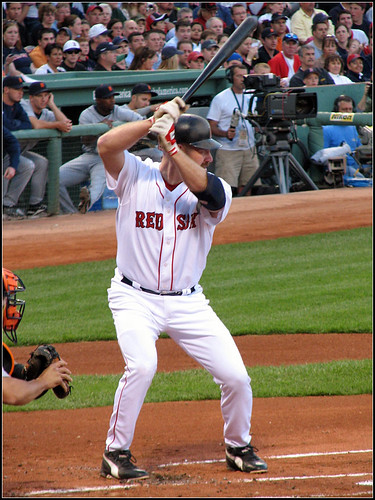 turned himself into an outstanding defender at that position. When Lowell got hurt earlier this season, Youkilis moved back to third and acquitted himself well once again; he finished with a plus-8 on Bill James' Fielding Bible scale, exactly the same number with which Lowell finished the season.
And when a torn labrum sidelined Lowell for Game 2 of the American League Division Series, Youkilis again shifted over to third base and was one of the big keys to the game. He made a great play coming in on a Torii Hunter bunt to lead off the inning -- the sort of dribbler the Angels couldn't seem to handle all night. He then robbed pinch-hitter Gary Matthews with an awfully nice catch of a pop fly while leaning into the camera well.
From there, it was easy for Jonathan Papelbon to finish off the overmatched Howie Kendrick.
The votes already are in -- with many of them undoubtedly marked "Francisco Rodriguez," too -- but Kevin Youkilis showed again Friday night why he's the most valuable player in the American League.
One other note: I might be the only one, but I'm not sure why Terry Francona ran for David Ortiz in a tie game in the 9th inning. If they were down one run, sure, I get it. A single scores Coco Crisp and probably doesn't score Ortiz. Fine. You need that run.
I think we all forgot, in the hullabaloo over Dustin Pedroia's stretch run -- the second baseman hit .355 with 35 RBI and 43 runs in his final 48 games -- just who the real MVP of the Red Sox and the American League should be this year.
Hint: He was the guy playing out of position last night but still making two impressive defensive plays to close out the Angels.
Kevin Youkilis hit .312, OBP'ed .390 and slugged .569 this season with 29 home runs and 115 RBIs. (For comparison, Minnesota's Justin Morneau hit .300 with 23 home runs and 129 RBI, and he had an OBP of .374 and a slugging percentage of .499.)
But it's Youkilis' other contribution -- his ability to play first and third base at a high level -- that sets him apart.
When the Red Sox traded for Mike Lowell, Youkilis moved to first base and
turned himself into an outstanding defender at that position. When Lowell got hurt earlier this season, Youkilis moved back to third and acquitted himself well once again; he finished with a plus-8 on Bill James' Fielding Bible scale, exactly the same number with which Lowell finished the season.And when a torn labrum sidelined Lowell for Game 2 of the American League Division Series, Youkilis again shifted over to third base and was one of the big keys to the game. He made a great play coming in on a Torii Hunter bunt to lead off the inning -- the sort of dribbler the Angels couldn't seem to handle all night. He then robbed pinch-hitter Gary Matthews with an awfully nice catch of a pop fly while leaning into the camera well.
From there, it was easy for Jonathan Papelbon to finish off the overmatched Howie Kendrick.
The votes already are in -- with many of them undoubtedly marked "Francisco Rodriguez," too -- but Kevin Youkilis showed again Friday night why he's the most valuable player in the American League.
One other note: I might be the only one, but I'm not sure why Terry Francona ran for David Ortiz in a tie game in the 9th inning. If they were down one run, sure, I get it. A single scores Coco Crisp and probably doesn't score Ortiz. Fine. You need that run.
But in a tie game, what happens if everyone does what Youkilis did in that spot? What if everyone grounds out or pops up or strikes out or something? Then you've lost Ortiz in a game that's probably headed for extra innings. Along those same lines: What if you get back-to-back hits? What if Youkilis grounds to second base and then J.D. Drew singles? Ortiz is just as capable as Crisp of scoring in that situation. With no outs in the inning, the possibilities were endless.
It ended up working out, obviously, when J.D. Drew hit his two-run home run -- but Ortiz would have scored on that, too. In a tie game and with Papelbon set to pitch the bottom of the ninth, it seems like what you lose by lifting Ortiz in a potential extra-innings game outweighs what you gain by having a faster runner on second base with no outs.
Maybe it's just me.
Friday, October 3, 2008
Down and away isn't working on Bay
The Angels continue to try to pitch Jason Bay down and away, out of the strike zone, but it's a strategy that doesn't work if Bay doesn't chase the pitches. Ervin Santana twice tried to get Bay to bite on a pitch low and away; those are the pitches on which Bay struck out twice on Wednesday. He didn't bite tonight.
And after Bay took a called strike on a looping curveball on the inside half of the plate, Santana and catcher Jeff Mathis again decided to go low and away. Mathis even touched his glove to the ground as he slid to his right to give Santana a target. But when the pitch tailed back over the plate, catching way more of the strike zone than Santana wanted, Bay pounced.
Next thing Santana knew, his pitch was bouncing off the rocks in center field and the Red Sox had a 4-0 lead.
By the way, is it just me or does Buck Martinez sound like he's hiccupping every time he says "Ortiz"? It's Or-TEEZ, Buck, not OR-teez. (Hic.)
And after Bay took a called strike on a looping curveball on the inside half of the plate, Santana and catcher Jeff Mathis again decided to go low and away. Mathis even touched his glove to the ground as he slid to his right to give Santana a target. But when the pitch tailed back over the plate, catching way more of the strike zone than Santana wanted, Bay pounced.
Next thing Santana knew, his pitch was bouncing off the rocks in center field and the Red Sox had a 4-0 lead.
By the way, is it just me or does Buck Martinez sound like he's hiccupping every time he says "Ortiz"? It's Or-TEEZ, Buck, not OR-teez. (Hic.)
Patriots wary of 49ers' speed on defense
Left tackle Matt Light said this morning that blocking for Matt Cassel hasn't been much different than blocking for Tom Brady; though Cassel has scrambled eight times for 25 yards this season, the Patriots' offensive line hasn't changed anything about its protection to accomodate the new face in the backfield.
"No, I never worry about where he's at," Light said. "It doesn't change what I do, or how we do what we do."
 What might change what they do, though, is that threat San Francisco defensive end Justin Smith (right) poses from the outside. Smith has two sacks and a team-best 15 quarterback hurries in his first season with the 49ers after seven years with the Cincinnati Bengals; he had six tackles and one pass breakup when the Patriots played the Bengals last season.
"He's a guy that plays with a lot of speed coming off the edge, a lot of speed and power," Light said. "He's a very strong guy. The guy has played in this league for eight years, and he's very experienced in what he does."
Said Patriots coach Bill Belichick, "He's a very instinctive player -- the interception he had against Detroit came when he read the screen, pulled off the rush and made a very athletic play on the ball. He's quick; he's got a real good motor. He comes hard all the time. A lot of times, you see the start of the play and you think, 'Well, he's not going to be a factor on this play.' But he just outworks his opponent and hustles to the ball, hustles to the back side, makes plays on second and third effort."
That's indicative of the way the entire 49ers defense plays, and that'll impact the way the Patriots run the ball as well as the way they protect against the pass rush.
"If there's one thing about that defense in general, it's that those guys are very fast," running back LaMont Jordan said. "You're not going to beat them running east-west. To beat them, you have to go north-south. Reggie Bush pretty much was trying to east-west last week, and it didn't work out, so I think we have to take that and realize that the defense is very fast and they all know how to get to the ball."
Jordan, by the way, was a 49er fan growing up. But when a reporter asked him which 49er running back he admired most, he had a surprising answer:
"You know what? I grew up watching quarterbacks. I thought, all my life, I was going to be a quarterback, so I grew up watching the Elways, the Montanas, the Warren Moons of the world. I'm actually a Jeff George fan. Bledsoe, Marino, those guys. I was never big, growing up, on paying attention to running backs. ...
"It was probably 12th year in high school, when all the colleges were coming to look at me at running back, and I realized that to be successful at quarterback, you have to be at least about 6 feet and I was done growing at that point. Even to this day, I have a great deal of respect for quarterbacks; Brady, even before I came here, that's my No. 1 quarterback. I like watching Peyton do his thing. I like watching quarterbacks do their job."
"No, I never worry about where he's at," Light said. "It doesn't change what I do, or how we do what we do."
What might change what they do, though, is that threat San Francisco defensive end Justin Smith (right) poses from the outside. Smith has two sacks and a team-best 15 quarterback hurries in his first season with the 49ers after seven years with the Cincinnati Bengals; he had six tackles and one pass breakup when the Patriots played the Bengals last season."He's a guy that plays with a lot of speed coming off the edge, a lot of speed and power," Light said. "He's a very strong guy. The guy has played in this league for eight years, and he's very experienced in what he does."
Said Patriots coach Bill Belichick, "He's a very instinctive player -- the interception he had against Detroit came when he read the screen, pulled off the rush and made a very athletic play on the ball. He's quick; he's got a real good motor. He comes hard all the time. A lot of times, you see the start of the play and you think, 'Well, he's not going to be a factor on this play.' But he just outworks his opponent and hustles to the ball, hustles to the back side, makes plays on second and third effort."
That's indicative of the way the entire 49ers defense plays, and that'll impact the way the Patriots run the ball as well as the way they protect against the pass rush.
"If there's one thing about that defense in general, it's that those guys are very fast," running back LaMont Jordan said. "You're not going to beat them running east-west. To beat them, you have to go north-south. Reggie Bush pretty much was trying to east-west last week, and it didn't work out, so I think we have to take that and realize that the defense is very fast and they all know how to get to the ball."
Jordan, by the way, was a 49er fan growing up. But when a reporter asked him which 49er running back he admired most, he had a surprising answer:
"You know what? I grew up watching quarterbacks. I thought, all my life, I was going to be a quarterback, so I grew up watching the Elways, the Montanas, the Warren Moons of the world. I'm actually a Jeff George fan. Bledsoe, Marino, those guys. I was never big, growing up, on paying attention to running backs. ...
"It was probably 12th year in high school, when all the colleges were coming to look at me at running back, and I realized that to be successful at quarterback, you have to be at least about 6 feet and I was done growing at that point. Even to this day, I have a great deal of respect for quarterbacks; Brady, even before I came here, that's my No. 1 quarterback. I like watching Peyton do his thing. I like watching quarterbacks do their job."
Asked and answered: Dean Pees, Patriots defensive coordinator
 Dean Pees has been on both sides of the spread-out, option offense that the Miami Dolphins threw at the Patriots two weeks ago -- when he was the head coach at Kent State, he ran that same offense with then-quarterback (and now Cleveland Browns kick returner) Josh Cribbs.
The focus for Pees' defense during the bye week has been making sure the 49ers don't do to his defense what the Dolphins did two weeks ago.
What sort of challenge does the San Francisco offense present?
"It's always a big challenge. They like to get the ball downfield in the passing game. (Frank) Gore is one heck of a back. You hear a lot about a lot of players around the league, but I'm telling you, this guy is a really talented back. (Mike) Martz has always had a great attack on offense, really likes to get the ball downfield, spreads you out, does a lot of different things, so it's always a challenge for a defense."
They seem to be a team that doesn't panic in third-and-long; what do you do to counter that?
"Martz's offense, he's always been a guy, whether it's third down and 4 or whether it's third and 14, it seems like they've got a lot of calls -- a lot of times, offenses say, 'We don't have a lot of calls for third and 14,' but it seems like he does, and he does a good job of converting them. The first thing you've got to do on defense is that you've got to get them into those situations. That's the No. 1 thing. The second thing is, we've got to do a good job of changing things up, like most people want to do, and get off the field on third down, which we have not done a good enough job yet this year on, and that's our challenge. We've got to get off the field on third down."
Going into that Miami game, is the option something that if you don't have something prepared for it, it's difficult to adjust to on the fly?
"That's true of any offense; anytime somebody gives you a different wrinkle, you've got to adjust to it. That's our job. They did a good job; I give Miami a lot of credit for having a little bit of a scheme to come in and give us a different look. It's my job, though, as a coordinator, to do a better job of getting the adjustments to our guys quicker. We finally got it adjusted, but I needed to do a better job of getting it quicker, and I take responsibility for that. The players, when we do get it adjusted, need to do a better job of tackling it. We gave up a couple of plays that we actually had stopped; we just didn't tackle it. That was not the case early on. They caught us. I give them credit; I take responsibility. We've got to get it handled quicker. I've got to do a better job, and the players have got to do a better job. ...
"The first couple of times, yeah, but then we got it fixed, and we've got to do a better job of tackling it. On the long run, we had (Ronnie Brown) stopped; we just missed some tackles on that last 63-yarder. It's a combination of both, but it's my job as coordinator to get a stop."
Not that it was enjoyable, but was it a good learning experience for you?
"It's like anything -- you have good days, and you have bad days, and I wouldn't say that was one of my better days. I wouldn't say that was one of our better days on defense, period. You try to cover all the bases, like you do on offense, covering all the blitzes, and there's always going to be something that comes up. It's how you adapt to that and how you adjust to that. Moving forward, hopefully, we'll do a better job against it."
Is that, conceptually, similar to what's taking over the college game?
"One thing about being a coordinator in college for all those years is that I've seen it; having been a head coach, we ran it with Cribbs as a quarterback at Kent State. I know a little bit about it, but it's a lot more than that. It'd take my whole interview to sit here and explain it to you."
How would you assess the team's pass rush through these three games?
"Kind of like the way we've played defense: Inconsistent. That's been typical of what we've done in the first three games. We've played well at times, and we've played poor at times. We've just got to learn to be more consistent, whether it be pass rush, whether it be tackling, whether it be deep balls, third down, all those things. We've been good at times; we've been not so good at times. We've just got to learn to be more consistent, which is what we've been in the past. We've got to get back to that."
Game times set for Games 3 and 4 at Fenway
Major League Baseball announced game times for the rest of the Red Sox-Angels series (all times Eastern):
- Game 3: 7:17 p.m.
- Game 4: 8:37 p.m., unless the Chicago-Tampa Bay series has concluded, in which case the game would begin at 8:07 p.m.
- Game 5 (at Angel Stadium in Anaheim): 9:37 p.m. -- unless, again, the Chicago-Tampa Bay series has concluded, in which case it would begin at 8:37 p.m.
Thursday, October 2, 2008
Maybe workload and rest matter after all
C.C. Sabathia, who pitched his way into National League Cy Young contention by carrying the Brewers into the playoffs, got lit up by the Phillies tonight. He walked four hitters in 3 2/3 innings -- including a devastating walk to pitcher Brett Myers before he hung a breaking ball that Shane Victorino hit for the game-deciding grand slam.
Um, surprise?
"The guy is just a workhorse," TBS analyst Ernie Johnson said after the game, "but (the Phillies) had his number tonight."
"You're always going to blame it on three days' rest, that this was the fourth time," Dennis Eckersley said dismissively a moment later. "But the thing about it was that he was just missing. It wasn't like he was terrible."
SI's Tom Verducci even outlined this morning how more pitchers have pitched on three days' rest this season (76) than any season since 2004. The numbers have gone down since 1999, when it happened 123 times, but the numbers are up significantly from last season (63).
This, apparently, is a good thing.
"Perhaps people will get comfortable with the idea that pitching on short rest - with the right pitcher at the right time -- isn't the automatic arm-killer and high risk that it's been made out to be," he wrote.
Or, maybe people will start to realize that pitchers get tired and a lack of rest will inevitably catch up with them -- especially at the end of a long season. Let's look at Sabathia's last two weeks:
But it also meant that he was pitching on fumes today, and it showed. He started off fine, striking out Chase Utley and Ryan Howard, but he allowed back-to-back doubles in the second before walking Myers (after starting him off 0-2) and Jimmy Rollins (on four pitches) before Victorino tattooed a flat breaking ball (on a 1-2 count) into the left-field seats.
By the fourth inning, Sabathia was spent; he had to battle just to get Myers to fly out, and he surrendered another double to Rollins and walked Utley before Dale Sveum came to get him.
His final line: 3 2/3 innings, 98 pitches (5 earned runs).
That's what a tired pitcher looks like -- he walks guys he shouldn't walk, and he fails to finish off batters he should finish off. He isn't suddenly terrible; he just misses. But against big-league hitters, pitches that just miss end up in the left-field seats.
I'm not saying the Brewers shouldn't have used Sabathia as much as they did. They wouldn't have made the playoffs without him, and for that franchise, making the playoffs is a big, big deal.
I'm just saying that it shouldn't be a surprise that it eventually caught up with him. And if the Brewers force a Game 5 and bring Sabathia back, don't be surprised if it happens again.
Um, surprise?
"The guy is just a workhorse," TBS analyst Ernie Johnson said after the game, "but (the Phillies) had his number tonight."
"You're always going to blame it on three days' rest, that this was the fourth time," Dennis Eckersley said dismissively a moment later. "But the thing about it was that he was just missing. It wasn't like he was terrible."
SI's Tom Verducci even outlined this morning how more pitchers have pitched on three days' rest this season (76) than any season since 2004. The numbers have gone down since 1999, when it happened 123 times, but the numbers are up significantly from last season (63).
This, apparently, is a good thing.
"Perhaps people will get comfortable with the idea that pitching on short rest - with the right pitcher at the right time -- isn't the automatic arm-killer and high risk that it's been made out to be," he wrote.
Or, maybe people will start to realize that pitchers get tired and a lack of rest will inevitably catch up with them -- especially at the end of a long season. Let's look at Sabathia's last two weeks:
- Sept. 16: 7 innings, 99 pitches (4 earned runs);
- Sept. 20: 5 2/3 innings, 105 pitches (1 earned run);
- Sept. 24: 7 innings, 108 pitches (1 earned run);
- Sept. 28: 9 innings, 122 pitches (0 earned runs).
But it also meant that he was pitching on fumes today, and it showed. He started off fine, striking out Chase Utley and Ryan Howard, but he allowed back-to-back doubles in the second before walking Myers (after starting him off 0-2) and Jimmy Rollins (on four pitches) before Victorino tattooed a flat breaking ball (on a 1-2 count) into the left-field seats.
By the fourth inning, Sabathia was spent; he had to battle just to get Myers to fly out, and he surrendered another double to Rollins and walked Utley before Dale Sveum came to get him.
His final line: 3 2/3 innings, 98 pitches (5 earned runs).
That's what a tired pitcher looks like -- he walks guys he shouldn't walk, and he fails to finish off batters he should finish off. He isn't suddenly terrible; he just misses. But against big-league hitters, pitches that just miss end up in the left-field seats.
I'm not saying the Brewers shouldn't have used Sabathia as much as they did. They wouldn't have made the playoffs without him, and for that franchise, making the playoffs is a big, big deal.
I'm just saying that it shouldn't be a surprise that it eventually caught up with him. And if the Brewers force a Game 5 and bring Sabathia back, don't be surprised if it happens again.
Lowell might not play in Game 2
Kevin Baxter of the Los Angeles Times says that Mike Lowell's hip is affecting him far more than he let on -- and that it's time for him to step aside and let someone who's 100 percent play in his place.
Terry Francona appears to agree; the Boston Globe is reporting this afternoon that Lowell's injury has made for "a very difficult decision" and that Francona "may have to make some changes." That apparently would mean benching Lowell and playing with a 24-man roster; Kevin Youkilis could play third and Sean Casey probably would play first base.
How much that hurts the Red Sox at the plate mostly depends on how hurt Lowell is; the grizzled veteran went 0-for-4 with a strikeout in Game 1, and you'd think that a healthy Casey at the bat could provide more pop than an injured (though valiant) Lowell.
Francona, from his news conference today in Anaheim: "I spent a lot of time talking to Mike Lowell this morning. It's not just like a little nagging hamstring he's dealing with. I really don't know what we're going to do tomorrow. It's actually a very difficult decision for me. You've got a guy that's the ultimate gamer, who will go out there every day, and we're coming back in two days and going to Fenway and facing a lefty, and it's very important having his bat in the lineup. So, again, there's some decisions we need to still make, and I haven't really actually come to a conclusion yet."
In other news, the Globe also is reporting that Josh Beckett threw 67 pitches in a "pretty aggressive" bullpen session and appears on track to start Game 3 on Sunday.
Other Game 1 and Game 2 notes:
Terry Francona appears to agree; the Boston Globe is reporting this afternoon that Lowell's injury has made for "a very difficult decision" and that Francona "may have to make some changes." That apparently would mean benching Lowell and playing with a 24-man roster; Kevin Youkilis could play third and Sean Casey probably would play first base.
How much that hurts the Red Sox at the plate mostly depends on how hurt Lowell is; the grizzled veteran went 0-for-4 with a strikeout in Game 1, and you'd think that a healthy Casey at the bat could provide more pop than an injured (though valiant) Lowell.
Francona, from his news conference today in Anaheim: "I spent a lot of time talking to Mike Lowell this morning. It's not just like a little nagging hamstring he's dealing with. I really don't know what we're going to do tomorrow. It's actually a very difficult decision for me. You've got a guy that's the ultimate gamer, who will go out there every day, and we're coming back in two days and going to Fenway and facing a lefty, and it's very important having his bat in the lineup. So, again, there's some decisions we need to still make, and I haven't really actually come to a conclusion yet."
In other news, the Globe also is reporting that Josh Beckett threw 67 pitches in a "pretty aggressive" bullpen session and appears on track to start Game 3 on Sunday.
Other Game 1 and Game 2 notes:
- Jonathan Papelbon's scoreless ninth inning extended to 15 2/3 his streak of scoreless innings in the postseason. He's third all-time (behind Phil Niekro and Dennis Cook) in career playoff innings without allowing a run.
- David Ortiz has a hit in 12 straight American League Division Series games, which strikes me as impressive but about as statistically significant as having hits in 12 straight games on Thursdays.
- Jason Bay became the first Red Sox player to homer in his postseason debut since Todd Walker in 2003 against Oakland.
- Game 3 is still listed as Time TBA.
Asked and answered: Matt Cassel, Patriots quarterback
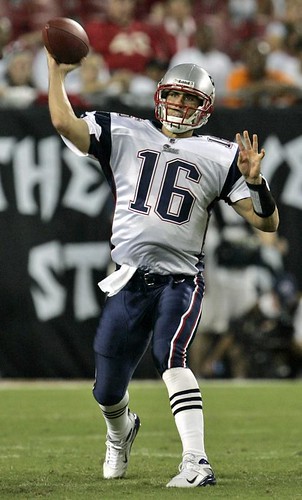
Matt Cassel completed 19 of 31 passes for 131 yards with one touchdown and one interception against Miami two weeks ago; he'll be making his third career start against the 49ers on Sunday.
He's still trying to find a way to connect with Randy Moss, who has six catches for 47 yards in Cassel's two starts after catching six passes for 116 yards and a touchdown in the Pats' season opener.
What have you seen out of San Francisco's defense?
They're a very experienced defense, especially in the secondary with (cornerback Nate) Clements, (cornerback Walt) Harris), (strong safety Michael) Lewis and (free safety Mark) Roman. They are all very experienced. They have a lot of team speed on defense. (Linebacker Patrick) Willis definitely adds to that, and Takeo Spikes. They're a physical group with a lot of experience.
How much did the bye week benefit you in terms of getting more comfortable with the offense?
"It's good any time you can get out there and work on things that may you're a little deficient in and also build on those things you've done well on. It's always good to have that week, and we were able to utilize it."
After seeing the Saints have success throwing the ball against the 49ers, do you think you'll be able to throw some deep passes against them?
"We hope so. Hopefully, we'll have the opportunity to do so, but you never know going into a game. You never know from week to week how one team is going to attack you versus another team. We are going in with the game plan that we have, and hopefully, we'll get some opportunities."
Do you feel a need to get Randy Moss more involved in the offense?
"You would always like to get Randy involved. I don't really have much to do with that other than the fact that I go through my reads; I let the coaches game-plan and do things to get Randy the ball."
What are you doing to build chemistry with him?
"Just continue to work hard. It will happen. We are growing together, and our chemistry is growing together. We'll be fine."
Is there a temptation to just throw the ball up for Moss because he has the capability to make plays on his own?
"No, not as a young quarterback. You have to go through your reads and you have to make smart decisions because if you start forcing it into double coverage, you'll get into bad habits and that's when bad plays happen. As much as you would like to get the ball to him as much as possible, you still have to smart with the football -- especially as a guy in there trying to make the right decisions with the ball."
How different is it now that you've got the spotlight on you as the starting quarterback?
"It's a lot different especially in this regard (with the media), and then when you go out in practice, you have to have a different level of focus because every day you have to go out and be on top of it, 100 percent. The team now relies on you to be the guy that leads them into good situations."
He's still trying to find a way to connect with Randy Moss, who has six catches for 47 yards in Cassel's two starts after catching six passes for 116 yards and a touchdown in the Pats' season opener.
What have you seen out of San Francisco's defense?
They're a very experienced defense, especially in the secondary with (cornerback Nate) Clements, (cornerback Walt) Harris), (strong safety Michael) Lewis and (free safety Mark) Roman. They are all very experienced. They have a lot of team speed on defense. (Linebacker Patrick) Willis definitely adds to that, and Takeo Spikes. They're a physical group with a lot of experience.
How much did the bye week benefit you in terms of getting more comfortable with the offense?
"It's good any time you can get out there and work on things that may you're a little deficient in and also build on those things you've done well on. It's always good to have that week, and we were able to utilize it."
After seeing the Saints have success throwing the ball against the 49ers, do you think you'll be able to throw some deep passes against them?
"We hope so. Hopefully, we'll have the opportunity to do so, but you never know going into a game. You never know from week to week how one team is going to attack you versus another team. We are going in with the game plan that we have, and hopefully, we'll get some opportunities."
Do you feel a need to get Randy Moss more involved in the offense?
"You would always like to get Randy involved. I don't really have much to do with that other than the fact that I go through my reads; I let the coaches game-plan and do things to get Randy the ball."
What are you doing to build chemistry with him?
"Just continue to work hard. It will happen. We are growing together, and our chemistry is growing together. We'll be fine."
Is there a temptation to just throw the ball up for Moss because he has the capability to make plays on his own?
"No, not as a young quarterback. You have to go through your reads and you have to make smart decisions because if you start forcing it into double coverage, you'll get into bad habits and that's when bad plays happen. As much as you would like to get the ball to him as much as possible, you still have to smart with the football -- especially as a guy in there trying to make the right decisions with the ball."
How different is it now that you've got the spotlight on you as the starting quarterback?
"It's a lot different especially in this regard (with the media), and then when you go out in practice, you have to have a different level of focus because every day you have to go out and be on top of it, 100 percent. The team now relies on you to be the guy that leads them into good situations."
Ace in the hole
Jon Lester pitched like an ace, writes John Tomase of the Boston Herald. Make room for a new ace, trumpets the Globe's Bob Ryan. Lester is the ace, pure and simple, writes colleague Adam Kilgore. Lester is a big-game pitcher, declares MLB.com's Anthony Castrovince. He looked every bit the ace, SI.com's Lee Jenkins writes. He's the Ferrari to Josh Beckett's Porsche, the Providence Journal's Jim Dolandson says.
(Apparently, Jon Lester had a nice start on Wednesday night.)
Here's more ace-related good news: Beckett played long toss before Wednesday's game and remains on track to start Game 3 of the series in Boston on Sunday. (Francona said he didn't feel the need to divulge a backup plan in the event Beckett can't go; clearly, it would be either Tim Wakefield or Paul Byrd, but it's to the team's advantage not to give that name before it has to.)
(Apparently, Jon Lester had a nice start on Wednesday night.)
Here's more ace-related good news: Beckett played long toss before Wednesday's game and remains on track to start Game 3 of the series in Boston on Sunday. (Francona said he didn't feel the need to divulge a backup plan in the event Beckett can't go; clearly, it would be either Tim Wakefield or Paul Byrd, but it's to the team's advantage not to give that name before it has to.)
One missed spot dooms Lackey
I was watching last night's Red Sox-Angels game from the same place everyone else was -- on my living-room couch. My roommate, Tom, who I believe will double the readership of this blog when he discovers I've written about him in it, was decked out in his Red Sox gear and leaning forward when left fielder Jason Bay came to the plate in the sixth inning.
Bay hadn't had much of a night to that point. Los Angeles starter John Lackey had gotten him to chase curveballs down and away twice already, and Bay looked pretty overmatched. When Bay came up in the sixth and took a hanging curveball over the middle of the plate for strike one, Tom and TBS' Dave Campbell both made the same point -- that was a pitch for Bay to swing at.
Catcher Mike Napoli then set up down and away. Way down and away. Everyone could see what was coming, and Tom could really see what was coming.
"Don't swing," Tom muttered. "Don't swing. Don't swing. Don't swing."
It was tough to tell what pitch Bay hit -- he said after the game it was a fastball up, but from the way Napoli was setting up, it's hard to believe it was supposed to be anything but a slider away. (The fastball was coming in at 92; the pitch Bay registered 89 on TBS' radar gun.) It made perfect sense; Lackey had thrown a soft curveball inside at which Bay should have swung, and he was going to come back with something hard (a slider, probably) down and away to get him to chase it.
Either way, Lackey missed his spot by about a foot. Bay crushed it.
And as the ball sailed toward the left-field bleachers, Tom sat up and cried, "Swing! Swing! Swing!"
Bay hadn't had much of a night to that point. Los Angeles starter John Lackey had gotten him to chase curveballs down and away twice already, and Bay looked pretty overmatched. When Bay came up in the sixth and took a hanging curveball over the middle of the plate for strike one, Tom and TBS' Dave Campbell both made the same point -- that was a pitch for Bay to swing at.
Catcher Mike Napoli then set up down and away. Way down and away. Everyone could see what was coming, and Tom could really see what was coming.
"Don't swing," Tom muttered. "Don't swing. Don't swing. Don't swing."
It was tough to tell what pitch Bay hit -- he said after the game it was a fastball up, but from the way Napoli was setting up, it's hard to believe it was supposed to be anything but a slider away. (The fastball was coming in at 92; the pitch Bay registered 89 on TBS' radar gun.) It made perfect sense; Lackey had thrown a soft curveball inside at which Bay should have swung, and he was going to come back with something hard (a slider, probably) down and away to get him to chase it.
Either way, Lackey missed his spot by about a foot. Bay crushed it.
And as the ball sailed toward the left-field bleachers, Tom sat up and cried, "Swing! Swing! Swing!"
Wednesday, October 1, 2008
Batter-pitcher matchups to watch tonight
As part of the Red Sox game notes package, here are a few batter-pitcher matchups to watch as the American League Division Series opens in Anaheim:
Los Angeles against Jon Lester
Good
Garrett Anderson, 3-for-7
Vladmir Guerrero, 4-for-10
Gary Matthews, 3-for-6, 2 HR
Not so good
Robb Quinlan, 1-for-7
Chone Figgins, 2-for-8
Mark Teixeira, 0-for-3
(Obviously, the sample size here is very small. Los Angeles has had quite a bit of success against Lester in the past -- he's 1-1 with a 7.78 ERA in four starts all-time against the Angels.)
Boston against John Lackey
Good
David Ortiz, 10-for-30, 2 HR, 9 RBI
Dustin Pedroia, 5-for-12
Kevin Youkilis, 5-for-17, 2 HR, 4 RBI
Not so good
Coco Crisp, 4-for-22 (though he does have 2 HR)
Mike Lowell, 3-for-19
Jason Varitek, 5-for-24
Los Angeles against Jon Lester
Good
Garrett Anderson, 3-for-7
Vladmir Guerrero, 4-for-10
Gary Matthews, 3-for-6, 2 HR
Not so good
Robb Quinlan, 1-for-7
Chone Figgins, 2-for-8
Mark Teixeira, 0-for-3
(Obviously, the sample size here is very small. Los Angeles has had quite a bit of success against Lester in the past -- he's 1-1 with a 7.78 ERA in four starts all-time against the Angels.)
Boston against John Lackey
Good
David Ortiz, 10-for-30, 2 HR, 9 RBI
Dustin Pedroia, 5-for-12
Kevin Youkilis, 5-for-17, 2 HR, 4 RBI
Not so good
Coco Crisp, 4-for-22 (though he does have 2 HR)
Mike Lowell, 3-for-19
Jason Varitek, 5-for-24
Asked and answered: Vince Wilfork, Patriots nose tackle
 Vince Wilfork knows all about what it takes to slow down Frank Gore -- and just how tough that job is. Wilfork and Gore played together at the University of Miami and both were part of the Hurricanes' national title team in 2001.
How's Frank Gore looking to you this year? Same guy?
"It's Frank being Frank. (laughs) Knowing him personally and knowing what he's been through in his life, with the injuries and the off-field issues with his family and everything, he's still looking the way he looked down at the University of Miami. He's pretty tough to tackle. He's elusive, and he's got some good speed -- he can catch the ball out of the backfield, too. Being that small (5-foot-9, 217 pounds), he can block pretty well.
"It's going to be very, very important for us, especially up front, when we have him, make sure we have him. A couple of times, you'll see on film that guys think they have him, and he'll pop out. We have to do a real good job of wrapping up this week, especially with him, but with the rest of the backs, also. (DeShaun) Foster is a pretty good back himself, and (Michael) Robinson will mix in on special teams and everything, and they might throw something in there for him. On defense, we have to do a real good job of tackling and being fundamentally sound and taking care of our jobs."
How important is it for the defensive front to re-establish itself after the Miami game?
"Our main goal was to get back on track as a team, as a defense. If we do that, if we take care of our jobs, everything will be OK. We'll make the adjustments where we need to make the adjustments on the sideline and in the locker room at halftime. But, once again, it always boils down to trusting one another on the field and not taking everything into your hands. That's not the way to go, and a lot of times we get caught up in doing that, and it hurts us."
Does it all start with Gore, shutting him down?
"As a defensive lineman, you always want to stop the run -- whoever they put back there. ... It starts with stopping the run, trying to get them in long-yardage situations so we can get after the passer. If we don't stop the run, we're going to have a long day, and I think everybody understands that."
A lot of teams have gotten a lot of hits on J.T. O'Sullivan this year; have you guys seen anything that you can capitalize on?
"There's opportunities out there, and we're going to try to. When we get the opportunity, we have to make them count. He's running that ship, and they're (2-2) and they're looking pretty good. They're looking explosive offensively, and they're putting up a lot of points. We have to do a real good job of just taking care of what we can take care of, and when those opportunities present themselves, we've got to take advantage of them."
How do their big-play capabilities change things if they get a third-and-12, third-and-13 situation?
"They have plays for that. Third and 15, third and 20 -- looking at film, they can pick those up. Most offenses, when you get in a situation like that, you try to get it manageable where you can get a punt off. Not this team. Third and 15, they have plays in their playbook they turn to where they're like, 'Let's pick it up,' and they have. It's going to take everybody out there this week. We're very excited to play. Our bye week is over, so we're ready to get back on the field and have some fun."
With a quarterback who's relatively inexperienced like J.T. O'Sullivan, do you ratchet it up a little bit defensively or do you still tailor to his strengths and weaknesses as a quarterback?
"No, you can't just single out anyone like that. He's running that ship pretty well; he can make some plays with his legs and with his arm. It's going to be real key for us, how we play this guy and how we play this team. I don't think, because he's being such a young quarterback, we'll do anything different than if we were playing against a 15-year vet. The game plan is the game plan, whatever it may be, and we have to execute it. We're looking forward to it. We're very excited to get back on the field and get this thing rolling."
Red Sox announce ALDS roster
The Red Sox announced their 25-man roster for the American League Division Series, which opens late tonight in Anaheim. (The Phillies and Brewers open the division series round today at 3 p.m. on TBS, with the Dodgers and Cubs following at 6:30. The White Sox and Rays play Thursday at 2:30 p.m.)
The roster, as released by the team today:
Pitchers (10): Josh Beckett, Paul Byrd, Manny Delcarmen, Jon Lester, Javier Lopez, Justin Masterson, Daisuke Matsuzaka, Hideki Okajima, Jonathan Papelbon, Tim Wakefield.
(Mike Timlin and David Aardsma are the most glaring omissions here. Aardsma had a sub-3.00 ERA as late as Aug. 12, but he allowed 17 earned runs in eight innings starting with the 19-17 near-disaster against the Rangers. Timlin, well, every evening eventually turns to night.)
Catchers (3): Kevin Cash, David Ross, Jason Varitek.
(With Wakefield on the roster, Cash is a necessity. Ross gives the Red Sox a little more flexibility for late-game substitutions -- particularly if Varitek continues to struggle at the plate.)
Infielders (7): Sean Casey, Alex Cora, Mike Lowell, Jed Lowrie, David Ortiz, Dustin Pedroia, Kevin Youkilis.
(No real suprises here; Lowell is expected to be ready to go tonight.)
Outfielders (5): Jason Bay, Coco Crisp, J.D. Drew, Jacoby Ellsbury, Mark Kotsay.
(Ditto on Drew.)
The roster, as released by the team today:
Pitchers (10): Josh Beckett, Paul Byrd, Manny Delcarmen, Jon Lester, Javier Lopez, Justin Masterson, Daisuke Matsuzaka, Hideki Okajima, Jonathan Papelbon, Tim Wakefield.
(Mike Timlin and David Aardsma are the most glaring omissions here. Aardsma had a sub-3.00 ERA as late as Aug. 12, but he allowed 17 earned runs in eight innings starting with the 19-17 near-disaster against the Rangers. Timlin, well, every evening eventually turns to night.)
Catchers (3): Kevin Cash, David Ross, Jason Varitek.
(With Wakefield on the roster, Cash is a necessity. Ross gives the Red Sox a little more flexibility for late-game substitutions -- particularly if Varitek continues to struggle at the plate.)
Infielders (7): Sean Casey, Alex Cora, Mike Lowell, Jed Lowrie, David Ortiz, Dustin Pedroia, Kevin Youkilis.
(No real suprises here; Lowell is expected to be ready to go tonight.)
Outfielders (5): Jason Bay, Coco Crisp, J.D. Drew, Jacoby Ellsbury, Mark Kotsay.
(Ditto on Drew.)
Subscribe to:
Posts (Atom)


 Posts
Posts

